Metal Roofing Systems Explained: Choosing the Right Type for Your Home
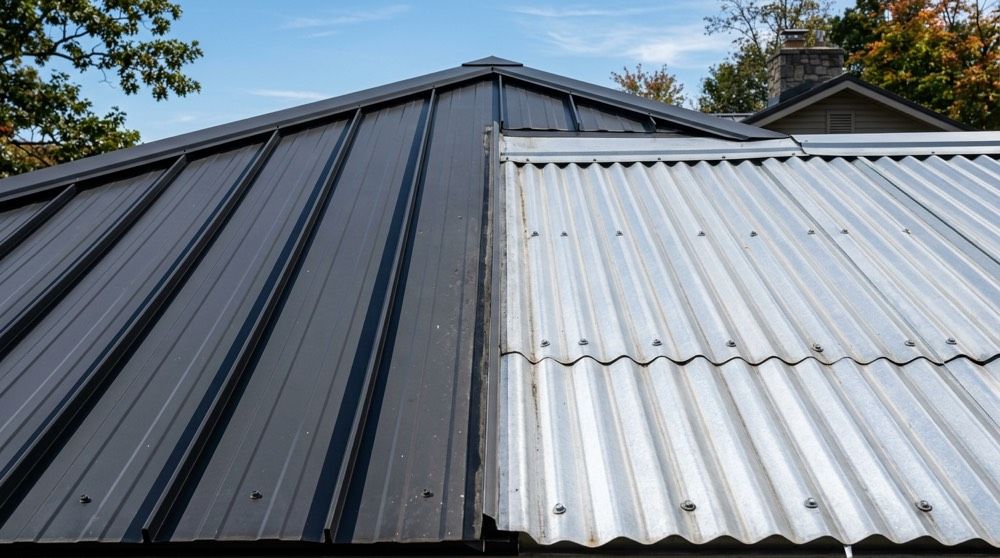
The main metal roofing types for homes fall into three families: standing seam systems with concealed fasteners, exposed-fastener panels, and metal shingles or tiles. Standing seam is the premium, longest-lasting choice; exposed-fastener panels cost less and install faster; metal shingles mimic slate, wood, or tile. The right system depends on your budget, roof shape, and how long you plan to stay in the home.
The Main Types of Metal Roofing for Homes
Residential metal roofing sorts into three practical categories: vertical-panel standing seam, exposed-fastener corrugated or ribbed panels, and metal shingles that imitate traditional materials. Nearly every metal roof you will be quoted on a Berks County home is one of these three, in either steel or aluminum.
The differences come down to how the panels attach and how they look. Standing seam locks together along raised vertical seams with the fasteners hidden underneath, so nothing that holds the roof down is exposed to weather. Exposed-fastener systems screw straight through the panel face into the deck below. Metal shingles are smaller, interlocking pieces stamped to look like slate or cedar shake. Each has a place, and each has trade-offs worth understanding before you sign anything. Our full metal-roofing overview, The Complete Guide to Metal Roofing for Pennsylvania Homes, covers the material choice in depth; this guide focuses on the systems themselves.
Standing Seam: The Premium Vertical-Seam System
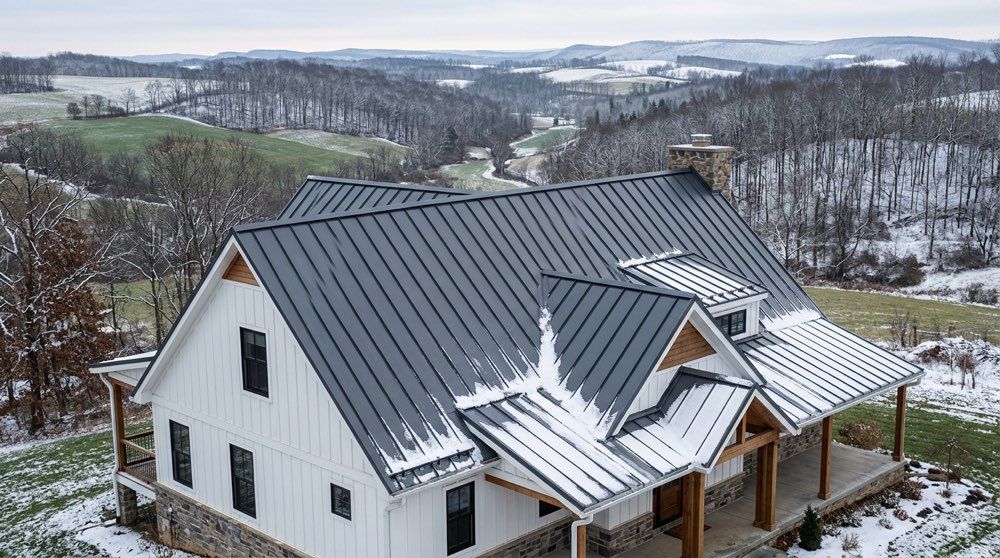
Standing seam is the system most homeowners picture when they imagine a modern metal roof: clean vertical lines running from ridge to eave, with no visible screws. It is the longest-lasting and best-performing residential metal option, and it is what Red Patch installs most often on Berks County homes.
Because the fasteners are concealed beneath the seams, there are no exposed screw holes to leak or gaskets to dry out and fail over decades. The panels are also engineered to expand and contract with temperature swings — important in Pennsylvania, where a roof can move through a 100-degree range between a January night and a July afternoon. Forbes Home's 2024 metal roofing analysis reports that a quality metal roof can last 40 to 70 years, roughly two to three times the 15-to-20-year service life of a typical asphalt shingle roof. Red Patch builds its concealed-fastener standing seam systems to last 50 to 70 years, and documents every job with drone photography so the finished seams and flashings are on record. The trade-off is cost: standing seam is the most expensive residential roof you can buy, and it demands an installer who works with metal regularly.
Exposed-Fastener Panels: The Practical Workhorse
Exposed-fastener panels — the ribbed or corrugated sheets you see on barns, garages, porches, and plenty of homes — are the budget-friendly end of metal roofing. The screws pass through the face of the panel into the roof deck, which makes installation faster and materially cheaper than standing seam.
That same feature is the system's weak point. Every exposed screw carries a rubber washer that seals the hole, and those washers are the part that ages first. Over 20 to 30 years, sun and thermal movement can shrink or crack them, and a roof may need its fasteners re-torqued or replaced to stay watertight. For a detached garage, a workshop, a porch roof, or a homeowner who wants metal's durability at a lower entry price, exposed-fastener panels are a sensible choice. For the primary roof over living space, most homeowners who can stretch to standing seam are glad they did. The gap in installed price is real, but so is the gap in maintenance and lifespan.
Metal Shingles, Tiles, and Slate-Look Systems
Metal shingles are the answer for homeowners who want metal's longevity but not the industrial, vertical-panel look. These are smaller interlocking metal pieces stamped and finished to resemble slate, cedar shake, or clay tile, and from the ground many people cannot tell them from the real thing.
They shine on homes where a standing seam roof would look out of place — a traditional Colonial, a Cape Cod, or a home in a neighborhood where the architecture leans classic. Because the pieces are small and interlocking, metal shingles also handle complex roofs with lots of hips, valleys, and dormers more gracefully than long panels do. They cost more than exposed-fastener panels and often land near standing seam pricing, so the decision is usually driven by appearance rather than budget. If you love the look of slate but not its weight or its price, a stamped metal shingle gets you most of the way there at a fraction of the structural demand.
Most metal shingles are made from coated steel or aluminum and carry the same long finish warranties as panel systems, so the durability story is nearly identical — you are trading the crisp vertical line of standing seam for a more textured, traditional roofscape. In a historic Berks County neighborhood where a bright ribbed panel would clash with the surrounding homes, a slate-look metal shingle in a muted tone often reads as entirely at home while quietly outlasting everything around it.
How Do You Choose the Right Metal Roofing Type?
Choose your metal system by weighing four things in order: how long you plan to stay, your roof's shape and slope, the look you want, and your budget. Those four almost always point to a clear answer once you lay them out honestly.
If you plan to stay in the home for the long haul and want to stop thinking about your roof for good, standing seam earns its premium. If you are roofing a secondary structure or need to control cost today, exposed-fastener panels do the job. If the home's style calls for a traditional roofline, metal shingles bridge the gap. Roof geometry matters too: simple gable roofs suit long standing-seam panels, while cut-up roofs with many angles often favor shingles. And if you are still deciding between metal and a quality architectural asphalt roof, our Complete Guide to Roof Replacement in Berks County walks through that comparison — metal is not automatically the right call for every homeowner, and a good roofer will tell you so.
Which Metal Systems Hold Up Best in Pennsylvania Weather?
All quality metal roofs outperform asphalt in Pennsylvania weather, but standing seam has the clearest edge. Its smooth, sealed surface sheds snow readily, resists uplift in high wind, and has no exposed fasteners to loosen under repeated freeze-thaw cycles.
Snow slides off metal instead of building into the heavy loads and ice dams that punish shingle roofs through a Berks County winter, which is one reason homeowners near Reading and Kutztown ask about metal after a hard winter. In wind, a properly clipped standing seam roof stays locked down because there are no shingle tabs to catch a gust and peel, and the panels are rated for wind speeds well beyond what most Pennsylvania storms deliver. Hail is the one area where homeowners should set expectations: metal resists puncture far better than asphalt, but a severe hailstorm can cosmetically dent thinner panels without causing a leak. Impact-rated metal and heavier gauges reduce that risk. If a storm has already damaged your current roof and you are weighing a metal replacement, our Storm Damage and Insurance Claims guide explains how to document the damage and work with your insurer before you commit to a new system.
Why the Installer Determines Whether Any System Lasts
The single biggest factor in how long a metal roof lasts is not the panel you pick — it is who installs it. Metal is far less forgiving than asphalt: seams, flashings, fastener placement, and thermal-movement details all have to be right, because the material will not hide a mistake the way overlapping shingles do.
Most roofing crews install asphalt all day and rarely touch metal, and a standing seam roof put on by a crew learning as they go is a roof that leaks at the penetrations within a few years. That is why it is worth asking a contractor directly how many metal roofs they install in a season, and asking to see drone or ground photos of finished seams and valleys. Red Patch is a veteran-owned Berks County contractor that installs metal regularly, documents every roof with drone photography, and backs its workmanship with a 15-year labor warranty — well beyond the one or two years most roofers offer. The system matters, but the hands putting it on matter more.
Frequently Asked Questions
What's the difference between standing seam and exposed-fastener metal roofing?
Standing seam hides its fasteners beneath raised vertical seams, so no screws are exposed to weather, and it typically lasts 50 to 70 years. Exposed-fastener panels screw through the panel face into the deck, which costs less but leaves rubber-washered screws that age and may need service over time. Standing seam is the premium residential choice; exposed-fastener suits secondary structures and tighter budgets.
Are metal shingles a good alternative to standing seam panels?
Yes, especially on traditional homes and cut-up roofs. Metal shingles interlock into small pieces stamped to look like slate or cedar shake, giving you metal's longevity with a classic appearance. They handle hips, valleys, and dormers well and often price near standing seam. The decision usually comes down to the look you want rather than a difference in durability or cost.
Is a standing seam metal roof worth the higher cost?
For a homeowner planning to stay in the house long term, standing seam is often worth it: with a 50-to-70-year lifespan and concealed fasteners, it may be the last roof the home ever needs. For someone on a tighter budget or planning to move within a few years, a quality architectural asphalt roof or exposed-fastener metal can be the smarter spend. It depends on your timeline and priorities.
Can any roofing contractor install a metal roof?
In theory, but you should not assume they should. Metal roofing demands specific skills in seaming, flashing, and thermal-movement detailing that many crews rarely practice because they install asphalt most of the time. A metal roof is only as good as its installer, so ask how many metal roofs a contractor completes each season and ask to see photos of finished work before you hire.
Ready to Talk About a Metal Roof?
If you are weighing a metal roof for your Berks County home, the best next step is a straight conversation with a contractor who installs metal regularly and will tell you honestly whether it is the right call for your house. Red Patch flies your roof with a drone, assesses the structure, and leaves you with a written, line-item estimate — no pressure, no obligation. Get a Free Roof Estimate or call us at (610) 587-2709.
Written by Sam Kensinger, founder and owner of Red Patch Roofing & Contracting, LLC in Leesport, PA. Sam is a combat veteran of the 82nd Airborne Division who built Red Patch to bring honest pricing, drone-documented workmanship, and a 15-year labor warranty to homeowners across Berks County.
Recent Posts