Identifying roof storm damage starts with checks you can make from the ground: missing or lifted shingles, shingle debris in the yard, dented gutters and vents, granule piles at the downspouts, and new stains on ceilings or in the attic. Much of the real damage, especially hail bruising and broken shingle seals, can't be seen from the ground, so a professional inspection is the reliable next step.
We're Red Patch Roofing & Contracting, a veteran-owned roofer that works only in Berks County. After every serious storm, our phones fill with the same question: "Did that do anything to my roof?" This guide walks through how to answer it yourself, safely, and what to do the moment you find something.
What Counts as Storm Damage on a Roof?
Storm damage is sudden harm to your roof from a specific weather event: wind, hail, falling limbs, or the weight of ice and snow. It's different from the slow wear of an aging roof, and that difference matters, because it's what separates a repair your insurance may cover from one it won't.
Wind and hail are the big ones. In 2023, wind and hail accounted for 42.5% of all homeowners insurance losses nationally, the single largest cause, according to
Insurance Information Institute data compiled from ISO. Water damage and freezing came in a distant second at 22.6%.
The National Weather Service defines a severe thunderstorm as one that can produce hail an inch or larger or wind gusts above 58 mph, and it notes plainly that hail of that size can damage roofs, per its
severe thunderstorm safety guidance. When a warning like that crosses Berks County, it's worth a look at your roof afterward, even if nothing seems wrong.
Wind Damage: The Signs to Look For
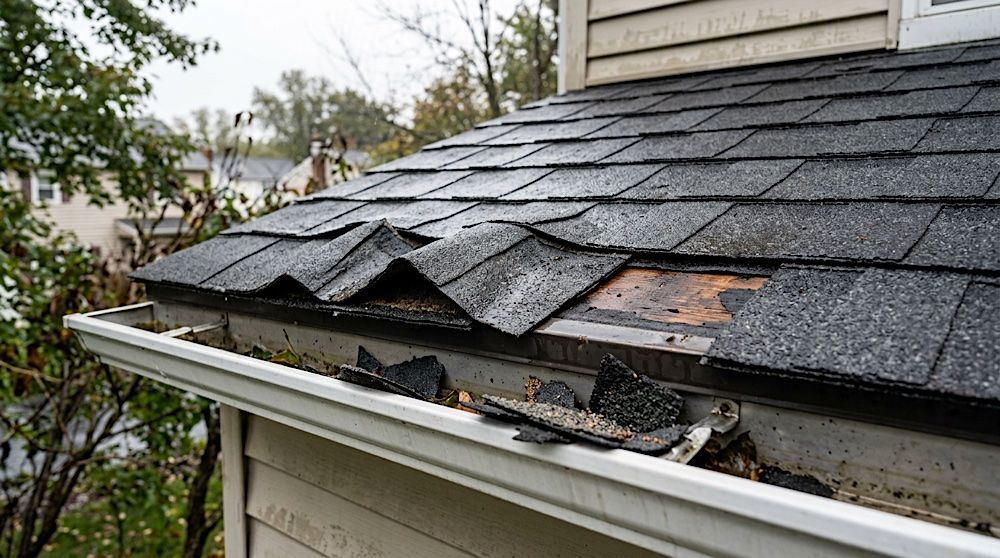
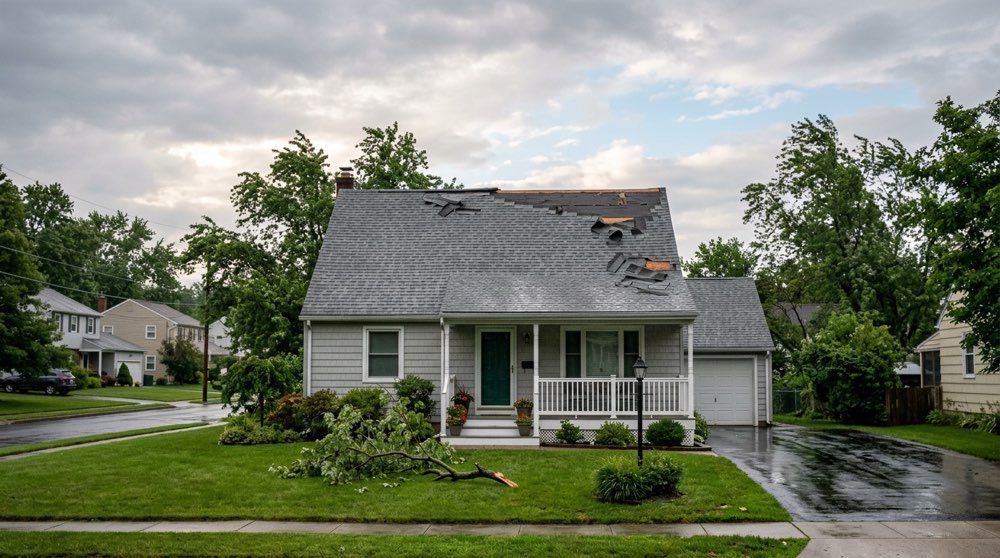
Wind damage shows up as shingles that are missing, lifted, creased, or flipped back, usually starting at the edges, corners, and ridge where uplift is strongest. Shingle pieces in the yard or driveway are the most obvious tell.
The less obvious sign is a broken seal. Asphalt shingles are held down partly by a strip of adhesive that bonds each course to the one below. A strong gust can pop that bond without tearing the shingle off. From the ground the roof looks fine, but the shingle is now free to flap in the next storm, and a lifted shingle lets wind-driven rain get underneath. A roofer can spot broken seals by the faint crease line across the shingle where it bent upward.
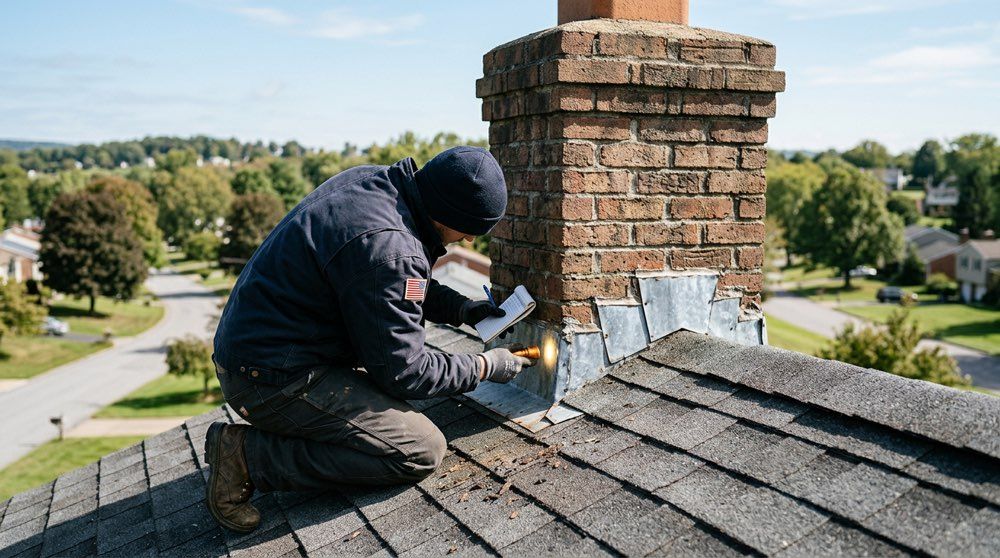
Also check the ridge cap along the peak of the roof and any flashing around chimneys and walls. Loose or bent flashing is one of the most common ways a windstorm turns into a leak weeks later.
Hail Damage: Why It's So Easy to Miss
Hail damage on asphalt shingles looks like small dark bruises or dimples where the impact knocked away the protective granules. It's rarely visible from the street, which is why so many homeowners assume a hailstorm missed them when it didn't.
You can gather clues from the ground. Look at the soft metals around your house: gutters, downspouts, window wraps, and roof vents. Fresh dents in those surfaces mean the hail was big and hard enough to bruise shingles too. After the storm, check where your downspouts discharge. A sudden pile of dark, sand-like granules is a sign that shingles lost part of their surface.
Bruised shingles don't always leak right away. The damage shortens their life, exposes the mat to the sun, and shows up as a problem months later, often after an insurance filing window has become harder to use. That delay is the main reason hail damage is worth checking promptly.
Falling Limbs and Debris
Impact damage from branches and debris is the easiest storm damage to find and often the most urgent to fix. A large limb can crack decking or punch straight through the roof, and even a smaller branch dragged across shingles can strip granules and break seals along its path.
Tree cover makes this a real Berks County concern. In older, established neighborhoods like Wyomissing, mature trees hang over a lot of rooftops, and a summer thunderstorm can bring down limbs that have been weakening for years. If a branch landed on your roof, look for broken or displaced shingles at the contact point, then check the attic directly below it for cracked boards or daylight showing through.
Is It Storm Damage or Just an Old Roof?
The difference is timing and pattern: storm damage appears suddenly and follows the path of the weather, while age-related wear develops gradually and evenly across the whole roof. Insurers draw exactly this line, so it helps to understand it before you call anyone.
Curling shingles across every slope, widespread granule thinning, and cracked sealant around old flashing usually point to age. Fresh creases on one windward slope, a cluster of missing shingles after a specific gusty night, or new dents on the gutters point to a storm. Plenty of roofs have both, and an aging roof is more vulnerable to storm damage in the first place. A good inspection separates the two and documents which is which, so you know whether you're looking at a claim, a repair, or a roof that's simply reached the end of its life.
Signs of Storm Damage Inside Your Home
Some storm damage announces itself indoors first. New water stains on ceilings, peeling paint near the roofline, damp insulation, or a musty smell in the attic after heavy rain all suggest water found a way in.
If your attic is safe to reach, take a flashlight up during daylight. Look for wet or darkened roof decking, drips along nails, and any spots where you can see daylight through the boards. Compare what you find against the location of any outside damage you spotted from the yard. Interior clues often lead straight to the problem area on the roof.
How Do You Check Your Roof Safely After a Storm?
Check your roof from the ground and from inside, never by climbing onto it. A storm-damaged roof can be slick, unstable, or weakened in ways you can't see, and walking on bruised or unsealed shingles can make the damage worse.
Wait until the storm has fully passed and it's daylight. Then walk the perimeter of the house and work through this list:
- Shingles or shingle pieces in the yard, driveway, or gutters
- Missing, lifted, or creased shingles, especially at edges, corners, and the ridge
- Dents in gutters, downspouts, vents, and window wraps
- Piles of granules at downspout outlets
- Loose or bent flashing around the chimney and walls
- Branches or debris resting on the roof
- New ceiling stains, damp attic insulation, or daylight through the decking
Photograph everything you find, from several angles, before you clean anything up. Binoculars help you get a closer look at the upper slopes without a ladder. If you see active damage or a hole, stay off the roof and call a professional.
What a Professional Storm Damage Inspection Covers
A professional inspection examines every slope up close, documents the damage in detail, and tells you honestly whether it's storm-related, how extensive it is, and what it will take to fix. That record is what everything afterward, from a repair plan to an insurance claim, is built on.
At Red Patch, every
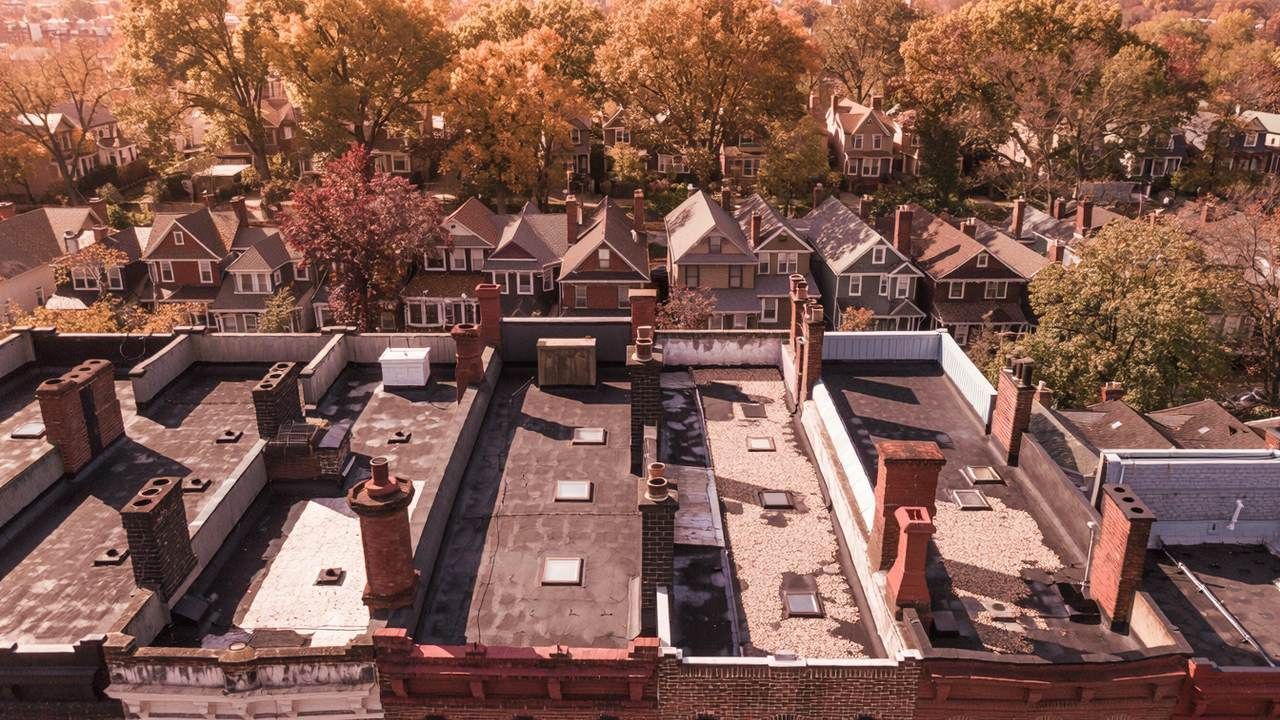
roof inspection starts with drone documentation, so you get aerial images of slopes you'd never see from the yard. We then check the roof up close where it's needed, look at flashing, vents, and ridge caps, and examine the attic where it's accessible. You get a written assessment of what we found and what it means, including a straight answer when the roof came through the storm just fine.
That last part matters. After a big storm, some contractors find "damage" on every roof on the street. An honest inspection is as willing to tell you there's nothing to claim as it is to document real damage in detail.
What to Do Next Once You Find Damage
Once you've found storm damage, protect the house from further harm, document everything, get a professional assessment, and only then decide on repairs and whether to file a claim. That order keeps your options open and your records clean.
- Stop active leaks. Contain dripping water with buckets and move valuables. If water is near electrical fixtures, shut off power to that area.
- Document before you fix. Take photos and video of the roof, the yard, and any interior damage. The Pennsylvania Insurance Department's
natural disaster insurance guide tells homeowners to photograph damage before cleanup.
- Make only temporary repairs. Tarping a hole or covering a broken area prevents more damage. Keep your receipts, and hold off on permanent repairs until the damage has been documented and inspected.
- Get the roof inspected by a local roofer before you contact your insurer, so you know whether the damage is real and significant.
- Decide on the claim with the facts in hand. Our
storm damage and insurance claims guide
walks through filing in Pennsylvania, working with the adjuster, and understanding what your policy covers.
Be wary of anyone who knocks on your door the day after a storm offering a "free roof." Take their card, then call a Berks County company with a local address and a reputation you can check.
Repair or Replace After a Storm?
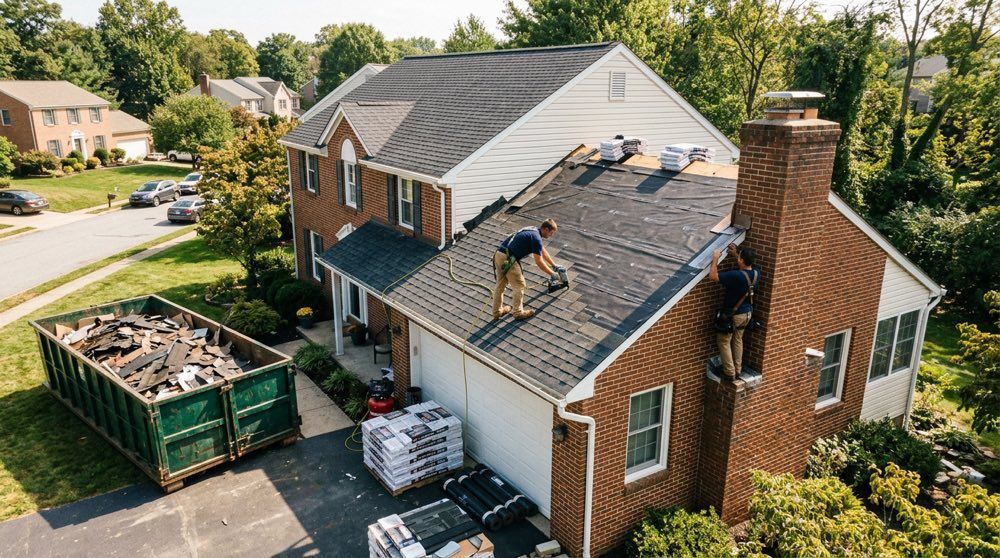
Limited storm damage on a roof with plenty of life left is usually a repair. Widespread damage, such as hail bruising across every slope or broken seals over a large area, often calls for replacement, because spot repairs can't restore the roof's integrity.
Our
roof repair service covers targeted fixes like shingle replacement, flashing repair, and leak diagnosis. For the bigger picture on keeping a roof healthy between storms, our
guide to roof repair, inspection, and maintenance explains what routine care looks like in Pennsylvania's climate. When damage is severe, we document why replacement is the right call, so any claim reflects the true scope rather than the cheapest patch.
Frequently Asked Questions
How soon after a storm should I have my roof inspected?
As soon as you can after the storm has passed and it's safe, ideally within a few days. A prompt inspection documents damage while it's clearly tied to that specific weather event, which makes it easier to address with your insurer. Waiting weeks or months gives the damage time to spread and makes it harder to prove what caused it.
Can my roof have storm damage even if nothing is leaking?
Yes, and it's common. Hail bruising and broken shingle seals often cause no leak at first. Bruised shingles lose granules and age faster, and unsealed shingles can lift in the next storm and let water in. That's why a roof that looks and feels fine after a storm can still have damage worth documenting now, before it turns into a leak later.
Is it safe to climb on my roof to look for damage?
No. Storm-damaged roofs can be slippery, unstable, or weakened in ways that aren't visible, and walking on bruised or unsealed shingles can make the damage worse. Check from the ground with binoculars and from the attic with a flashlight, photograph what you see, and leave the rooftop inspection to a professional with proper safety equipment.
What should I do if a contractor says I have storm damage I can't see?
Ask them to show you. A trustworthy roofer documents damage with clear photos or drone images you can review yourself, marked by location. If a contractor can't show you the damage, pressures you to sign on the spot, or offers to cover your deductible, get a second opinion from a local company before you agree to anything.
Worried a Storm Hit Your Roof?
If a recent storm has you wondering about your roof, we'll give you a straight answer. Red Patch provides drone-documented inspections and written assessments across Berks County, with exact arrival times and no pressure. See how we handle
storm damage roof repair and insurance claims, or get a
free roof estimate and call us at (610) 587-2709.
Written by Sam Kensinger, founder of Red Patch Roofing & Contracting, a veteran-owned roofing company serving Berks County, Pennsylvania. A combat veteran of the 82nd Airborne Division with three tours in Afghanistan, Sam built Red Patch on the standards he carried home from service: do the work right, document everything, and stand behind it. Red Patch installs Owens Corning Duration and GAF Timberline HDZ shingles and backs every roof with a 15-year labor warranty.