
Storm Damage and Insurance Claims: A Berks County Homeowner’s Complete Guide
By Sam Kensinger
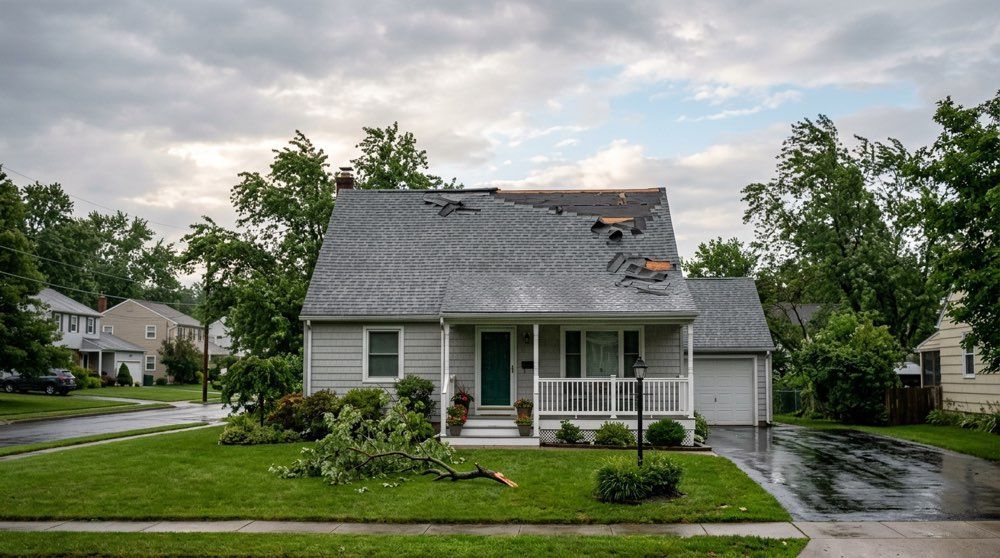
When a storm rolls through Berks County and you’re standing in the yard the next morning looking up at the roof, two problems arrive at once: the damage itself, and the insurance process you’ll have to navigate to fix it. Handling a roof storm damage insurance claim in Pennsylvania the right way — and in the right order — is the difference between a smooth, fully covered repair and a denied claim, a lowball settlement, or a roof “fixed” by a contractor who’s three states away by the time it leaks again.
This guide walks you through the whole thing: how to tell whether your roof was actually damaged, what to do in the critical first hours, how the insurance claim works in Pennsylvania, what your policy really covers, and how to handle the adjuster. We’re Red Patch Roofing & Contracting, a veteran-owned company that works only in Berks County — which means we’re still here long after the storm, and we’ve walked a lot of neighbors through exactly this process.
First, How to Tell If Your Roof Has Storm Damage
Not every storm that rattles your windows damages your roof, and not all roof damage is visible from the ground. Knowing what to look for tells you whether you even have a claim worth filing.
Wind damage is the most common around here. After a windstorm, look for shingles that are missing, lifted, curled, or flipped, and for debris in the yard that’s clearly shingle material. A wind-damaged roof often loses shingles along the edges and ridges first, where uplift is strongest. Even shingles that look fine can have their seal broken by wind, leaving them vulnerable to the next storm — which is part of why a wind damage roof claim is sometimes warranted even when the roof looks mostly intact from the street.
Hail damage is sneakier. Hail damage on an asphalt shingle roof in PA shows up as bruises or dimples where the granule surface is knocked away, exposing the mat underneath — and it’s often hard to see from the ground. Check for an unusual amount of granules in your gutters and downspouts after a hailstorm, and look at metal surfaces like gutters, downspouts, and vents for dents, which are a strong tell that hail hit hard enough to bruise the shingles too.
Storm damage you can see from the ground vs. what you can’t. You can spot missing shingles, obvious debris impact, and sagging from the yard. What you’ll miss without a professional are broken seals, hairline hail bruising, cracked or displaced flashing, and damage on slopes you can’t see. This is why a post-storm inspection matters — and why the NRCA’s consumer guidance on weather-event damage stresses a proper inspection rather than a ground-level glance.
A word of caution: don’t climb on your own roof after a storm to check. It’s dangerous, and you can do more damage walking on compromised shingles. Look from the ground, then get a professional up there.
The First 48 Hours After a Storm
What you do in the first day or two sets up everything that follows. Move through these steps in order.
1. Make sure everyone’s safe and handle active leaks. If water is coming in, contain it — buckets, move belongings — and shut off electricity to affected areas if water is near fixtures or wiring.
2. Document everything before you touch it. Take clear photos and video of all the damage — the roof from the ground, any interior leaks or stains, and damaged belongings — before any cleanup or temporary repair. This documentation is the backbone of your claim. The Pennsylvania Insurance Department’s natural-disaster guidance is explicit that homeowners should photograph and video damage before cleanup.
3. Make reasonable temporary repairs — but only temporary ones. You’re responsible for preventing further damage, which can mean tarping a hole or covering a broken window. Keep receipts; these costs are typically reimbursable as part of the claim. Do not make permanent repairs before the insurer inspects — and don’t let anyone else, either.
4. Get a professional roof inspection. Have a reputable local roofer assess the actual damage and document it properly. This tells you whether the damage exceeds your deductible and is worth claiming, and it gives you an independent record before the insurance company’s adjuster ever shows up.
5. Then contact your insurer. With documentation and a professional assessment in hand, you’re ready to file from a position of knowledge rather than guesswork.
Notice what’s not on this list: signing anything with the contractor who knocked on your door an hour after the storm. More on that below.
How to File a Roof Insurance Claim in Pennsylvania
Once you know you have legitimate, deductible-exceeding damage, here’s how the claim process works in our state.
Contact your insurance company promptly. Pennsylvania policies require timely notice, so don’t sit on it. Give them your documentation and your professional assessment. Write down the names, titles, and dates of everyone you speak with, and your claim number — the PA Insurance Department recommends keeping exactly this kind of record.
Understand the clock. There’s a window to file a storm damage claim, and it’s not unlimited. The longer you wait, the harder it becomes to prove the damage came from a specific storm rather than age or neglect — which insurers will argue. File while the connection to the storm is clear.
The insurer assigns an adjuster who will inspect your roof and write an estimate. This is the pivotal step, and we cover how to handle it below.
You receive a settlement decision. If approved, the payout depends on your coverage type (more on RCV vs. ACV next). If denied or underpaid, you have options — including a roofer who can document why the decision was wrong, and an appeal process.
A roofing contractor who knows the claims process can help at nearly every step — documenting damage to the standard adjusters expect, meeting the adjuster on site, and making sure nothing legitimate gets missed. That’s a service we provide for our Berks County customers, and it routinely changes the outcome.
What Homeowners Insurance Actually Covers on Your Roof
Coverage is where a lot of roof insurance claim in Berks County hopes run into reality, so understand this before you file.
What’s usually covered: sudden, accidental damage from a covered peril — wind, hail, falling debris like tree limbs, and the weight of ice or snow. These are the classic storm causes, and they’re what most standard policies are designed to handle. A wind-blown limb through the roof, missing shingles after a microburst, hail bruising from a spring storm — storm damage roof claims in PA typically center on exactly these perils.
A note on “acts of God.” Homeowners sometimes worry that storm damage won’t be covered because it was a natural event. The opposite is generally true: standard policies are built to cover sudden weather damage. What they exclude are flooding (which requires separate flood insurance) and earthquakes — neither of which is your typical Berks County wind-and-hail event.
What’s usually excluded: wear and tear, age, deferred maintenance, and pre-existing damage. Insurance is for sudden events, not for an old roof reaching the end of its life. This is why insurers scrutinize the age and condition of your roof — and why an older roof can be denied even after a genuine storm.
RCV vs. ACV — the term that decides your check. This is the single most important thing to know about your policy. Replacement Cost Value (RCV) pays what it costs to replace the damaged roof at today’s prices. Actual Cash Value (ACV) pays that amount minus depreciation for the roof’s age — which on an older roof can be a small fraction of the replacement cost. Two neighbors with identical storm damage and identical $1,000 deductibles can receive wildly different checks based solely on which coverage they carry. Find out which one you have before a storm, not after.
Deductibles, including special wind/hail deductibles. Many Pennsylvania policies now carry a separate, often percentage-based deductible for wind and hail — say 1% to 5% of your home’s insured value — which can be far higher than your standard deductible. Check your declarations page so you’re not surprised.
Working With the Insurance Adjuster
The adjuster’s inspection is the moment your claim is largely won or lost, because the adjuster’s estimate is what the insurer pays on.
What the adjuster does. They inspect the roof, assess the cause and extent of the damage, and write an estimate of what the insurer owes. They’re professionals doing a job — but they work for the insurance company, and it’s on you to make sure your legitimate damage is fully captured.
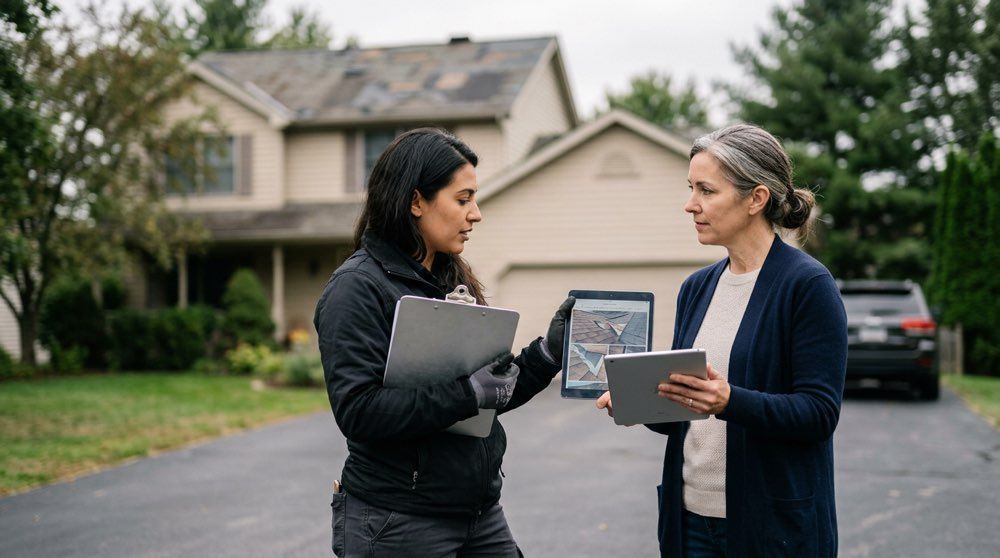
Why you should have your roofer there. When your roofer is present during the adjuster’s inspection, they can point out damage the adjuster might otherwise miss, speak the same technical language, and advocate for a complete, accurate estimate. An adjuster on a tight schedule looking at one slope can overlook hail bruising or seal damage that a roofer who already inspected the whole roof will flag. This single step — having a knowledgeable advocate on the roof at the same time — is one of the highest-value things a homeowner can do.
If the adjuster says “no damage” or underpays. A denial or a partial-approval lowball isn’t the end. With proper documentation, you can request a re-inspection, supplement the claim for missed items, or appeal. If you and the insurer disagree on the estimate, don’t rush to accept it — be prepared to make your case with evidence. A roofer who documented the damage independently is invaluable here.
Storm-Damaged Roof: Repair or Replace?
Once the claim is moving, the practical question is whether your storm-damaged roof needs a repair or a full replacement — and that isn’t always your decision alone, because the insurer’s coverage finding factors in.
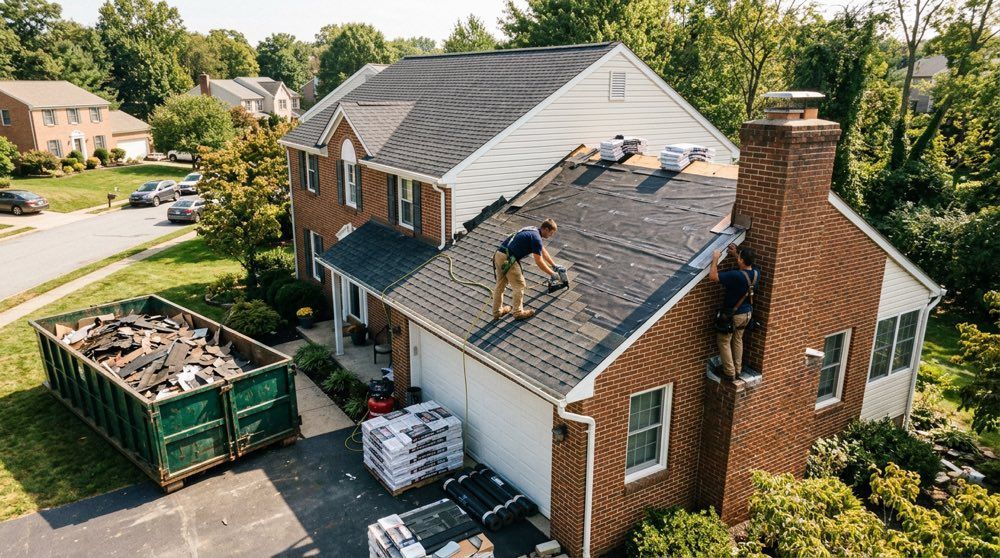
For limited, localized damage on a roof with good life left — a dozen shingles off one slope after a wind event — a repair is often the right and covered fix. But storm damage frequently makes the decision for you. If a hailstorm bruised shingles across the entire roof, or wind broke seals over a wide area, spot repairs won’t restore the roof’s integrity, and matching new shingles to a weathered, possibly discontinued existing roof is its own problem. In those cases a full replacement is both the correct repair and, often, what a fair settlement should cover.
Age matters here too. On an older roof that a storm pushed over the edge, an insurer may approve replacement — but if you carry actual cash value coverage, the depreciated payout can leave a real gap between the check and the cost. Knowing your RCV-versus-ACV status, covered above, tells you what to expect.
Our job is to give you a straight assessment: if a repair genuinely solves it, we’ll say so; if the damage warrants replacement, we’ll document why, so the claim reflects the true scope rather than the cheapest patch.
Beware the Storm Chaser
After every significant storm in Berks County, the out-of-town trucks appear — crews going door to door, offering to “handle your insurance” and get you a “free roof.” Some are legitimate. Many are not, and the pattern is worth knowing.
Storm chasers move in after a weather event, sign up as many homeowners as they can, do fast work of uneven quality, and leave the area — taking any warranty they “offered” with them. When a problem surfaces in a year or two, there’s no one local to call. The PA Insurance Department specifically warns homeowners to be wary of solicitors after disasters, to verify licensing, and never to sign paperwork with blank sections or sign off that work is complete before it actually is.
A few protections: be cautious of anyone pressuring you to sign on the spot, especially a document that assigns your insurance benefits to them. Confirm the contractor is registered and insured in Pennsylvania. And favor a local company with a local reputation and a real address — one that was here before the storm and will be here after it. That last point isn’t a slogan for us; it’s the entire reason we stay in Berks County and don’t chase storms across state lines.
How Red Patch Helps With Storm Damage Claims
When a storm damages your roof, you don’t just need someone to nail on new shingles — you need someone who can help you through the claim and stand behind the repair for the long haul.
That’s the role we play for our Berks County neighbors. We inspect the roof and document the damage to the standard adjusters expect. We can be there during the adjuster’s inspection to make sure nothing legitimate is missed. And when it’s time to do the work, we do it right and back it with our 15-year labor warranty — not the one or two years that’s standard, and certainly not the vanishing “warranty” of a crew that’s already left the state.
Our founder, Sam Kensinger, served three tours with the 82nd Airborne before coming home to start this company, and the standards from that — show up, do it to spec, document everything, stand behind it — are exactly what a storm claim demands. If the damage is severe enough that replacement is the right call, we’ll guide you through that too; our complete roof replacement guide covers what that process looks like.
You can see everything we do for storm-damaged roofs on our storm damage services page.
Frequently Asked Questions
How long do I have to file a storm damage claim in Pennsylvania?
Pennsylvania policies require timely notice, and while exact windows vary by policy, the practical answer is: file as soon as you’ve documented the damage and had a professional assessment. The longer you wait, the harder it is to tie the damage to a specific storm, which gives the insurer grounds to deny.
Will filing a roof claim raise my premiums?
It can. Insurers consider claim history, and a claim may affect your rate or future renewals. That’s part of why it’s worth confirming the damage exceeds your deductible and is genuinely worth claiming — a professional assessment helps you make that call before you file.
Should I file a claim or pay out of pocket?
Compare the repair cost to your deductible. If the damage is minor and close to or below your deductible, paying out of pocket may make more sense than a claim that could affect your premium. If it’s significant storm damage well above the deductible, filing is usually the right move. We’ll give you an honest assessment of which situation you’re in.
Can I choose my own roofing contractor for insurance work?
Yes. Your insurance company can suggest contractors, but the choice is yours — they can’t require you to use a specific company. You have the right to hire the local roofer you trust to do the repair or replacement, regardless of who the insurer recommends. Don’t let anyone pressure you into signing your work over to them on the spot.
Does Red Patch work with insurance companies?
Yes. We document damage properly, can be present for the adjuster’s inspection, and work alongside your insurer through the claim. We don’t, however, ask you to sign over your insurance benefits — you stay in control of your claim and your choice of contractor.
Storm Damage? Start With an Honest Inspection.
If a storm hit your home, the smartest first move is a professional, no-pressure roof inspection from a local company that will document the damage honestly — and tell you plainly whether you even have a claim worth filing.
Schedule your free storm damage inspection. We’ll assess the roof, document what we find, walk you through your options, and — if repair or replacement is needed — back the work with our 15-year labor warranty in writing.
Sam Kensinger is the founder of Red Patch Roofing & Contracting, a veteran-owned roofing company serving Berks County, Pennsylvania. A combat veteran of the 82nd Airborne Division with three tours in Afghanistan, Sam built Red Patch on the standards he carried home from service: do the work right, document everything, and stand behind it. Red Patch installs Owens Corning Duration and GAF Timberline HDZ shingles and backs every roof with a 15-year labor warranty.

Share this article