The Berks County Homeowner’s Guide to Roof Repair, Inspection, and Maintenance
By Sam Kensinger
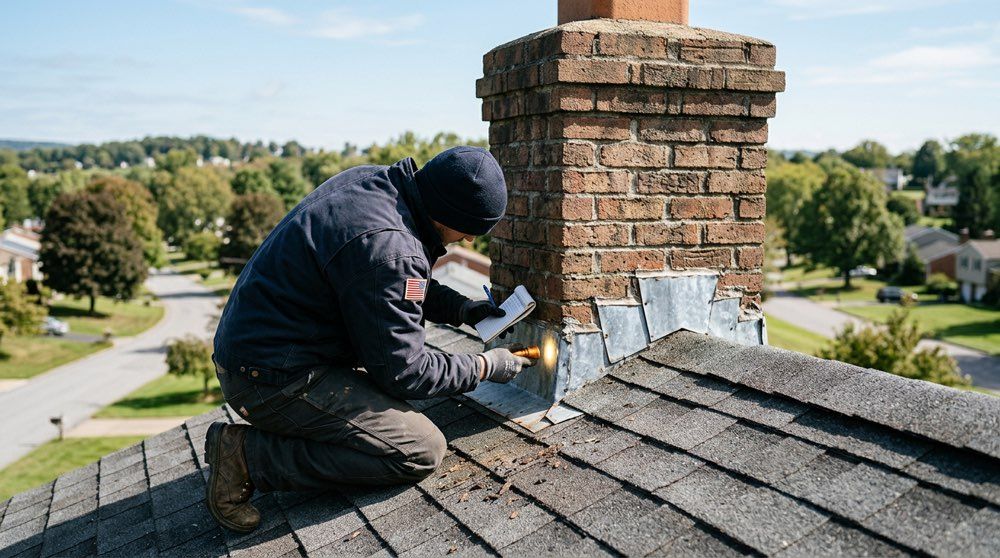
Most roof problems are cheaper, smaller, and easier to fix when you catch them early — which is the whole case for understanding roof repair, inspection, and maintenance before a small issue becomes a five-figure one. A roof repair in Berks County, PA might be a flashing fix or a few replaced shingles today; left alone, that same spot becomes a rotted deck, a ruined ceiling, and a much bigger bill a year from now. This guide covers the common repairs, the warning signs worth acting on, when to get a professional inspection, and the simple year-round maintenance that quietly adds years to your roof’s life.
We’re Red Patch Roofing & Contracting, a veteran-owned company serving Berks County, Pennsylvania. We do repairs and inspections, not just replacements — and we’ll tell you honestly when a repair is the smart move and when it isn’t. That’s the whole spirit of this guide.
The Most Common Roof Repairs (And What Causes Them)
The good news about most roof problems is that they’re well-understood and fixable. Knowing the usual suspects helps you describe what you’re seeing and understand what a repair involves.
Roof leaks.
The headline problem, and the trickiest, because where water shows up inside is rarely directly below where it’s getting in — it travels along the deck and framing first. Finding the true source is a diagnostic skill, not a guess, which is why a pro tracks a leak to its origin rather than just sealing the nearest stain.
Flashing failures.
Flashing is the metal that seals the transitions — around chimneys, walls, skylights, and valleys — and failed flashing causes more leaks than failed shingles ever do. Most “the roof is leaking” calls we get trace back to flashing, not the field of the roof.
Missing or damaged shingles.
Wind lifts or tears them, age cracks and curls them, and impact breaks them. A handful in one area is usually a straightforward repair; widespread loss is a different conversation.
Pipe boot, vent, and skylight leaks.
The rubber boots around plumbing vents dry out and crack, and any roof penetration is a potential entry point. These small components fail more often than the shingles around them and are a common, inexpensive repair.
Sealant and caulk failure.
The sealant around flashing edges and fasteners dries, cracks, and shrinks over years of sun and freeze-thaw. Refreshing failed sealant is minor work — but neglected, it opens the same leak paths as failed flashing.
Ice-dam and gutter-related damage.
Clogged gutters and ice dams push water back under the roof edge, damaging the eaves, fascia, and decking. A proper repair addresses both the damage and its cause — drainage and ventilation — so it doesn’t simply recur next winter.
A practical note on cost: minor repairs like a cracked pipe boot or a small section of resealing are inexpensive; flashing rebuilds, valley work, or replacing rotted decking cost more because they involve more labor and materials. The only honest way to price a repair is to see it — anyone quoting a roof repair sight-unseen is guessing.
For residential roof repair, the lesson is consistency across all of them: the fix is only as good as the diagnosis. A patch in the wrong place is money spent without solving the problem.
Warning Signs Your Roof Needs Attention
Roofs usually warn you before they fail — if you know what to watch for. Catching these signs early is the difference between a minor roofing repair in Berks County and major interior damage.
Stains on your ceiling.
A brown ring or water stain on a ceiling or upstairs wall means water is getting in somewhere above. It may be a small, slow leak — but small, slow leaks rot framing and grow mold while you wait. A stain is a “call now,” not a “watch it for a while.”
Granules in your gutters.
Those sand-like granules are your shingles’ sun protection. Some loss is normal, especially on a new roof; heavy accumulation, or bare, shiny patches on the shingles, means they’re aging out. The NRCA’s consumer resources note that granule loss and the condition of shingles are key indicators of where a roof is in its life.
Sagging or dips in the roofline.
This is the urgent one. A sagging roofline can indicate a structural problem — failing decking or even compromised framing — and it warrants a professional look promptly, not eventually.
Rising energy bills.
A roof and attic that have lost ventilation or insulation performance can quietly push up heating and cooling costs. If your bills are climbing without an obvious reason, the roof system is worth checking.
Moss or algae growth.
Green streaks or moss on the shingles aren’t only cosmetic — moss holds moisture against the roof and can work between shingles over time. In our humid Pennsylvania summers it’s worth addressing rather than ignoring.
Other tells:
Daylight or damp insulation in the attic, shingles that are curling or cupping across the roof, and repeated leaks showing up in new spots each season. Any of these means it’s time for a professional set of eyes.
Roof Inspections: When You Need One and What a Good One Includes
A roof inspection is cheap insurance — a professional look that catches small problems while they’re still small. Here’s when a roof inspection in PA is worth scheduling.
Annually, as routine maintenance.
An annual inspection catches developing issues before they leak. For most Berks County homes, once a year — ideally in fall, before winter — is the right cadence.
After a major storm.
Wind and hail can damage a roof in ways that aren’t visible from the ground. A post-storm inspection documents any damage while the link to the storm is fresh, which matters if an insurance claim is involved.
Before buying or selling a home.
A pre-purchase roof inspection tells a buyer exactly what they’re getting and can be real leverage in negotiation; for a seller, knowing the roof’s condition up front avoids surprises at closing.
What a good inspection includes.
A thorough inspection isn’t a glance from the driveway. It covers the field of the roof, the flashing at every penetration and transition, the condition of valleys and the ridge, the gutters, and — importantly — the attic, where active leaks and ventilation problems reveal themselves. Some inspections now use drones to safely document slopes that are hard to reach, which is useful for thorough photo documentation, though it doesn’t replace getting into the attic.
When we inspect a roof, we tell you what we find plainly — including “your roof is fine, see you next year,” which is an answer we give often and happily.
Year-Round Roof Maintenance: A Pennsylvania Calendar
The cheapest roof work is the maintenance that prevents repairs in the first place. A little attention through the seasons meaningfully extends a roof’s life.
Spring — assess what winter did. After a Pennsylvania winter, check for damage from ice, snow load, and wind: lifted or missing shingles, displaced flashing, and granule buildup in gutters. Spring is when winter’s hidden damage surfaces, so it’s the time to catch and fix it before spring storms exploit it.
Summer and ongoing — keep water moving and the attic breathing. Keep gutters and downspouts clear so water drains off the roof instead of backing up under the edges. Trim back tree limbs that overhang or rub the roof. And don’t overlook attic ventilation: proper ventilation keeps the attic cooler and drier, which protects the shingles from the underside and improves energy efficiency. Reflective, ENERGY STAR-qualified roofing and a well-ventilated attic work together — the EPA’s ENERGY STAR roof products program is built around exactly this kind of energy performance.
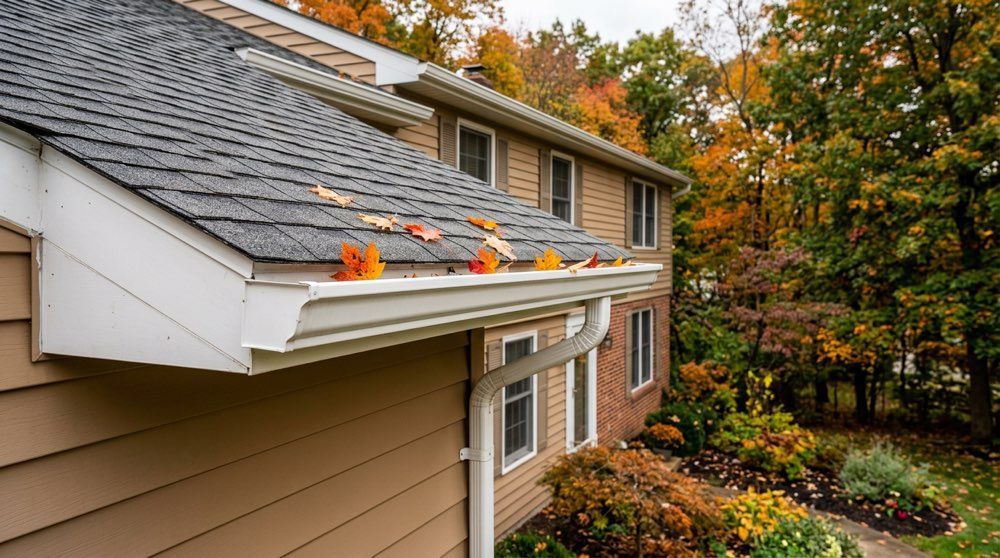
Fall — prepare for winter. This is the most important maintenance window in our climate. Clean the gutters thoroughly (clogged gutters are a leading cause of winter ice dams), confirm flashing is sound, and address any small repairs before the cold sets in. Going into winter with a tight, clean roof is the single best thing you can do for it.
Winter — watch for ice dams and snow load. Ice dams — ridges of ice at the eaves that force meltwater back up under the shingles — are a real Pennsylvania problem, driven by attic heat and clogged gutters. The NRCA advises against using sharp tools or hot water on a snowy roof and recommends calling a professional for steep roofs or thick ice. Remove what snow you safely can from the ground, and address the underlying ventilation and insulation causes in the off-season rather than fighting ice dams every January.
This is the heart of a good roof maintenance routine for Pennsylvania: water moving freely, the attic breathing, and small problems fixed in the season you find them.
The Real Cost of Putting Off a Roof Repair
The most expensive roof repair is the one you don’t make. A small leak doesn’t stay small — it’s a slow, compounding problem, and understanding how it compounds is the best argument for acting early.
Water that gets past the roofing doesn’t evaporate; it soaks into the wood decking and framing, where it rots structure that’s far more expensive to replace than a few shingles. It saturates insulation, which loses its R-value and drives up energy bills. It feeds mold inside walls and ceilings, which becomes a health and remediation issue. And it eventually shows up as the stained, sagging ceiling that turns a small, cheap fix into a project involving drywall, paint, insulation, framing — and the original roof repair on top of it all.
The arithmetic is consistent: a problem caught and fixed early is almost always a fraction of the cost of the same problem left to spread. That’s not a sales pitch — it’s the single most reliable rule in roofing, and it’s exactly why annual inspections and prompt repairs save homeowners money over the life of a roof.
Repair or Replace? When Maintenance Isn’t Enough
At some point, every roof crosses the line from “maintain and repair” to “replace,” and an honest roofer will tell you where yours stands. Repairs make sense on a roof with good years left and localized problems. Replacement becomes the smart money when the roof is past about 20 years, when problems are widespread rather than localized, or when you find yourself paying for repairs in new spots every season — at that point you’re spending good money to extend a roof that’s failing as a system.
There’s also the patchwork problem. Repairing a roof that truly needs replacement is like patching a tire that keeps going flat — each fix costs money, and the failures keep surfacing in new spots. Matching new shingles to an aged, sun-faded roof is genuinely hard, too: older shingle lines get discontinued, and even the same product weathers to a different shade, so repairs on an old roof tend to look like repairs. Past a certain age, paying once for a new roof beats paying repeatedly to prop up an old one.
We’ll always give you the honest version of this. If a repair genuinely buys you several more good years, that’s what we’ll recommend — we’re not interested in selling you a roof you don’t need yet. And when replacement truly is the right call, our complete roof replacement guide walks through exactly what that process looks like, from materials to cost to warranty.
Why Choose Red Patch for Roof Repair
Plenty of companies will happily quote you a full replacement for a problem a repair would solve. That’s not how we work.
Our founder, Sam Kensinger, served three tours with the 82nd Airborne before coming home to Berks County and starting this company, and the standard he built it on is simple: tell people the truth and do the work right. For repairs and maintenance, that means diagnosing the actual problem, fixing what genuinely needs fixing, and telling you honestly when a repair will hold and when it won’t. When a repair is the right answer, we make the repair. We’re not looking to turn every service call into a replacement.
We stay local on purpose. We’re a Berks County company with a Berks County reputation — when you call about a leak, you reach people who know the area’s homes and will still be here next year.
And because we handle repairs and maintenance — not just replacements — calling us doesn’t mean getting talked into a new roof. A lot of our work is exactly the kind of small, timely fix this guide is about: a flashing repair, a few shingles, a pipe boot, an annual inspection that turns up nothing at all. That steady, honest work is how a roofing company earns a neighborhood’s trust, and it’s the work we’re built around.
On the work that warrants it, including any replacement, we stand behind our installations with a 15-year labor warranty, far beyond the one or two years that’s standard in the trade.
You can see everything we handle on our roof repair services page.
Frequently Asked Questions
How much does a roof repair cost in Berks County?
It depends entirely on the problem — a cracked pipe boot is a minor, inexpensive fix, while widespread flashing or decking work costs more. The honest answer comes after a look at the actual issue. What we can promise is a straight assessment of whether you’re looking at a small repair or a larger problem, and a clear, itemized quote either way.
How often should I have my roof inspected?
For most Berks County homes, once a year is the right routine — ideally in the fall, before winter. You should also have your roof inspected after any major storm and before buying or selling a home.
Is it worth repairing an older roof, or should I just replace it?
It depends on the roof’s age and the extent of the problem. On a roof with good life left and a localized issue, a repair is often the smart, cost-effective move. On a roof past about 20 years with recurring problems, repairs become money spent on a roof that’s near the end. We’ll give you an honest read on which situation you’re in.
How long should a roof repair last?
A quality repair to a sound roof should last for years — often the remaining life of the roof, when the underlying roof is in good shape. Repairs are most reliable when the rest of the roof has good life left; on an aging roof, a repair may hold for a while but won’t stop other areas from failing. We’ll tell you honestly which situation your roof is in.
Can I do my own roof maintenance?
You can safely do the ground-level parts — keeping gutters clear from a stable ladder, trimming overhanging branches, and watching for warning signs like ceiling stains and granules in the gutters. Leave anything that involves getting on the roof, or diagnosing a leak, to a professional. Walking a roof is dangerous and can cause damage.
Caught a Problem Early? Let’s Take a Look.
Whether you’ve spotted a stain on the ceiling, found granules in the gutters, or just want the peace of mind of a professional inspection before winter, the smart move is to have a local roofer take an honest look while the problem is still small.
Schedule your free roof inspection. We’ll assess your roof, tell you plainly what we find — including when nothing needs doing — and give you a clear, itemized quote for any work, backed by our 15-year labor warranty.
Sam Kensinger is the founder of Red Patch Roofing & Contracting, a veteran-owned roofing company serving Berks County, Pennsylvania. A combat veteran of the 82nd Airborne Division with three tours in Afghanistan, Sam built Red Patch on the standards he carried home from service: do the work right, document everything, and stand behind it. Red Patch installs Owens Corning Duration and GAF Timberline HDZ shingles and backs every roof with a 15-year labor warranty.

Share this article