
The Most Common Roof Repairs (And What They Actually Cost)
By Sam Kensinger
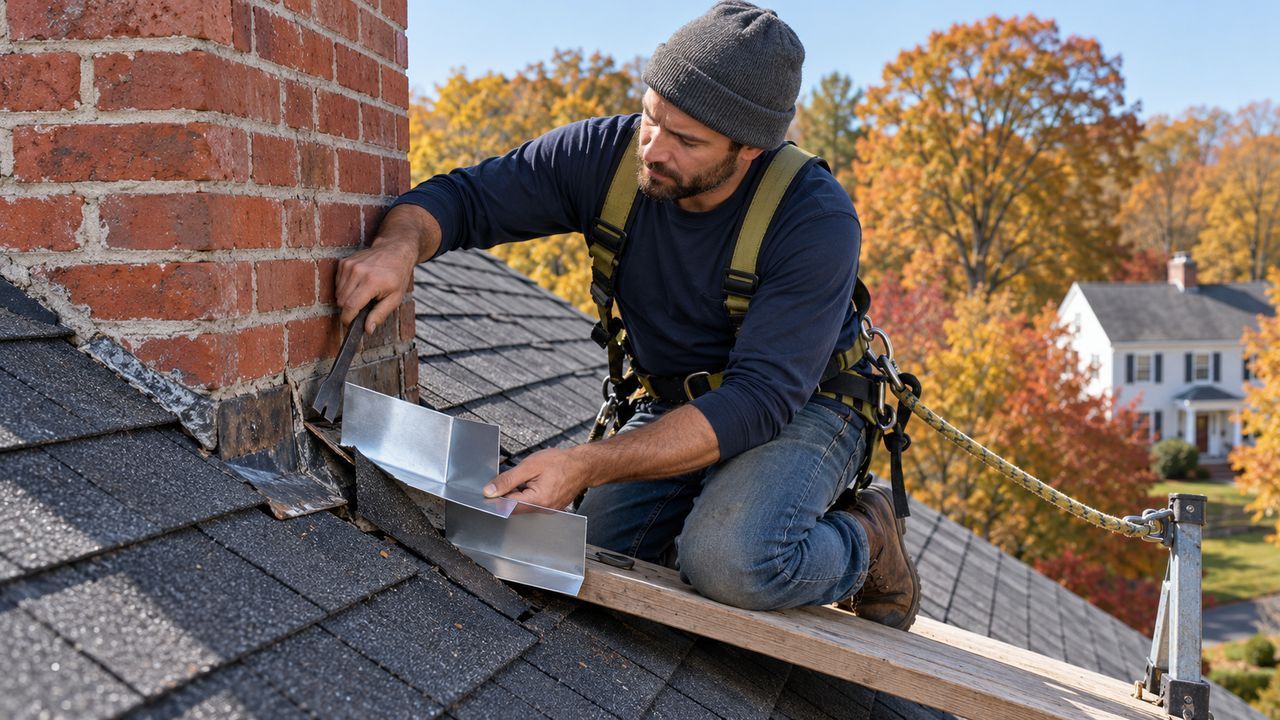
The most common roof repairs are failed flashing, missing or wind-damaged shingles, cracked pipe boots, worn-out sealant, and leaks around chimneys and skylights. Most are small, targeted fixes. Nationally, the average roof repair runs about $1,174, and most land between roughly $400 and $2,000. Decking, chimney, and fascia work push the bill higher, while a single pipe boot sits at the low end.
We're Red Patch Roofing & Contracting, a veteran-owned roofer based in Leesport that works only in Berks County. Most of the calls we get start with "the roof is leaking" and end with a fix far smaller than the homeowner feared. This guide walks through the repairs we see most, what causes each one, and what drives the price up or down.
What Do Roof Repairs Cost on Average?
A typical roof repair costs a few hundred dollars to about two thousand, depending on what failed and how much of the roof has to be opened up to fix it. The size of the problem matters less than where it sits and what it has damaged underneath.
National cost data gives a useful starting point. HomeAdvisor's 2026 roof repair cost guide, updated in June 2026, puts the national average roof repair at $1,174, with a normal range of $395 to $1,968. The same guide lists flashing issues at $200 to $500, a leaking roof at $360 to $1,550, and fascia and soffit repairs anywhere from $600 to $6,000.
Treat those figures as a frame of reference, not a quote. A repair on a simple ranch roof in Muhlenberg and the same repair on a steep, three-story Victorian in Reading involve very different amounts of time, safety setup, and access. That's why we never quote a repair sight-unseen. We look first, then give you a written, line-item number.
Flashing Repairs: The Leak Source Most Homeowners Never See
Flashing is the thin metal that seals the joints where a roof meets something else: a chimney, a sidewall, a skylight, or another roof plane. When it fails, water runs behind it and into the house, and failed flashing causes more leaks than failed shingles do.
Flashing fails for a few predictable reasons. The sealant along its edges dries out and cracks after years of summer heat and winter freeze-thaw cycles. Nails back out as the house moves. On older homes, the original flashing was sometimes reused when the roof was last replaced, so it's older than the shingles around it. And some flashing was simply never installed right in the first place, with sealant doing the work that properly lapped metal should.
The repair depends on the type. Resealing a sound piece of flashing is quick and inexpensive. Rebuilding step flashing along a sidewall or counter flashing on a chimney takes longer, because shingles have to come up and go back down around the new metal. That's where the national $200 to $500 range for flashing climbs toward the upper end.
Missing, Lifted, and Cracked Shingles
Damaged shingles are the repair most people picture, and they're usually straightforward: a handful of shingles replaced in one area, sealed down, and matched as closely as the current product lines allow.
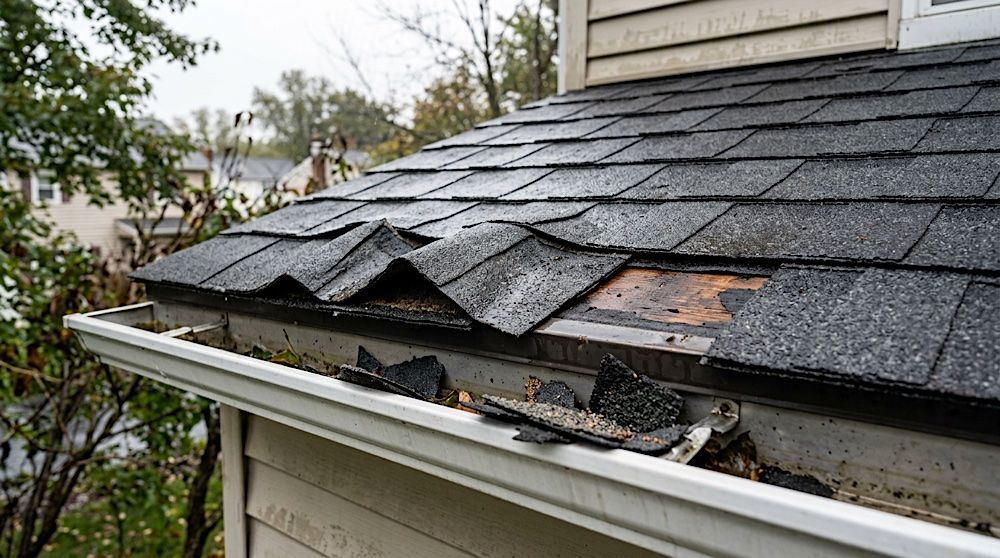
Wind is the most common cause in Berks County. A strong gust can break the adhesive seal that holds a shingle down, crease it, or tear it off entirely, and the damage tends to start at the edges, corners, and ridge where uplift is strongest. Age is the other cause. As shingles lose their granules and dry out over the years, they curl, crack, and become brittle enough to break in the next storm.
How shingles are fastened matters too. The U.S. Department of Energy's Building America guidance on asphalt shingle roofs notes that codes require at least four fasteners per strip shingle and recommends six nails per shingle in high-wind areas, each placed within the shingle's nailing zone. Shingles that were nailed too high or too few times are the ones that come loose first.
A few missing shingles in one spot is a small repair. Shingles missing or lifting across several slopes is a sign the whole roof has lost its grip, and that's a different conversation.
Pipe Boots, Vents, and Other Roof Penetrations
Every pipe, vent, and fan that comes through your roof is a potential leak point, and the rubber boots that seal plumbing vent pipes are among the most common failures we fix. They're also among the least expensive.
A pipe boot is a rubber collar on a metal or plastic base that wraps around the vent pipe. Sunlight and temperature swings dry the rubber out until it cracks, often years before the shingles around it are worn. Water then runs down the pipe and shows up as a stain on a ceiling, frequently in a bathroom or hallway. Replacing the boot takes far less time than most homeowners expect.
Roof vents, exhaust fan caps, and attic fans fail in similar ways: cracked housings, loose fasteners, or sealant that has pulled away. Each is a small, contained fix as long as it's caught before water has soaked the decking around it.
Chimney and Skylight Leaks
Chimneys and skylights combine flashing, sealant, and a large opening in the roof, so when they leak the repair is usually more involved than a pipe boot or a few shingles. They're also two of the places where water damage can spread quietly for months.
On a chimney, the usual culprits are worn counter flashing, cracked mortar joints where the flashing is set, and a missing or undersized cricket, the small peaked section that diverts water around the uphill side of a wide chimney. Reading's older brick twins and row homes add another wrinkle: many have chimneys shared between two homes, so the flashing on your side meets your neighbor's roof, and a proper repair has to account for both.
Skylights leak at their flashing kit, at a failed seal in the unit, or from condensation that looks like a leak but isn't. Knowing which one you have matters, because the fixes are very different and only one of them is a roofing problem.
Valleys, Ridge Caps, and Drip Edge
Valleys, ridges, and roof edges are where water and wind concentrate, which makes them common repair spots even on roofs that are otherwise in good shape.
A valley is the channel where two roof slopes meet, and it carries more water than any other part of the roof. Worn or poorly cut shingles in a valley, or a missing ice-and-water barrier underneath, can let water work its way in during heavy rain. Ridge caps take the full force of the wind along the peak and can crack or blow loose. And a missing or bent drip edge along the eaves lets water wick behind the gutter and into the fascia board.
None of these is usually a large job on its own. The cost rises when the damage has been there long enough to rot the wood underneath.
Why Is a Roof Leak So Hard to Find?
Water rarely comes through the ceiling directly below the spot where it got into the roof. It enters at a gap, runs along the decking or a rafter, and drips wherever gravity finally lets it go, sometimes several feet away. That's why leak diagnosis is a skill, not a guess.
A good diagnosis works backward from the stain. It starts in the attic, where water trails and dark spots on the decking show the actual path, then moves to the roof surface above to find the entry point: a cracked boot, a gap in the flashing, a nail that has backed out. Leaks that only appear in wind-driven rain or during snowmelt take the most patience, because the conditions that cause them aren't there on a dry afternoon.
This is where cheap repairs go wrong. A patch of roofing cement over the spot nearest the stain can look like a fix and fail with the next storm, because it was never at the source. At Red Patch, every roof repair starts with drone documentation and a close look at the problem area, so the fix goes where the water actually gets in, and you see the photos.
Soft Decking, Fascia, and Ice-Dam Damage
The repairs that cost the most are usually the ones that waited the longest. When a small leak runs for a season or two, the plywood decking under the shingles softens and rots, and the repair grows from a part to a section of the roof.
Replacing decking means removing the shingles and underlayment over the damaged area, cutting out the rotted wood, installing new sheathing, and rebuilding the layers on top. Fascia and soffit damage follows a similar pattern at the roof's edge, often from clogged gutters or a missing drip edge, which is why the national range for that work is so wide.
Ice dams are the Pennsylvania version of this problem. Heat escaping from the living space melts snow on the upper roof, the water refreezes at the cold eaves, and the ridge of ice pushes meltwater back under the shingles. The damage shows up along the eaves and ceilings near exterior walls. A lasting repair fixes the damaged wood and also addresses the cause, usually attic insulation and ventilation, so it doesn't return next February.
What Makes One Repair Cost More Than Another?
Three things set the price of a roof repair more than anything else: what's damaged underneath, how hard the area is to reach, and whether the materials can be matched. The visible problem is often the smallest part of the bill.
Hidden damage is the biggest variable. A pipe boot replaced before it leaks costs a fraction of the same boot replaced after the decking around it has rotted. Access is next. A steep pitch, a third-story roof, or a section over a sunroom adds safety setup and time. Matching is the third. Shingle lines change over the years, so finding a close match for a 15-year-old roof can take extra sourcing, and an exact match isn't always possible.
Season can play a role as well. Shingles need warmth to seal down properly, so some winter repairs are completed with hand-sealing or finished once temperatures rise. A good contractor tells you up front which parts of the job are affected and why.
When a Repair Stops Making Sense
A repair is the right call when the roof is fundamentally sound and the problem is local. It stops making sense when the leaks are spreading, the shingles are failing across every slope, or the roof is close to the end of its service life anyway.
We tell homeowners plainly which situation they're in. If a repair will buy you years of good service, that's what we recommend. If you'd be putting money into a roof that's about to fail, we'll show you the photos and explain why, and our breakdown of what roof replacement actually costs in Berks County will help you weigh the two. For the wider view of keeping a roof healthy between repairs, read our guide to roof repair, inspection, and maintenance.
Regular check-ups catch most of these problems while they're still cheap. An annual roof inspection, ideally in the fall, gives you a documented look at flashing, boots, and shingles before winter puts them to the test. And if a storm is behind the damage, our storm damage roof repair and insurance claims page explains how we document it.
Red Patch serves homeowners throughout Berks County, and you can see where we work on our Pennsylvania service area page.
Frequently Asked Questions
Can a roof leak wait until spring to be fixed?
It's risky to wait. A small winter leak keeps soaking the decking and insulation every time snow melts or rain falls, and wet wood can rot and grow mold within weeks. Even if a full repair has to wait for warmer weather, a temporary fix such as a tarp or sealed patch should go on right away so the damage doesn't spread.
Is roofing cement a good fix for a small leak?
Only as a short-term patch. Roofing cement can slow a leak around a nail or flashing edge, but it dries, cracks, and shrinks within a season or two, and smearing it over the wrong spot hides the real entry point. A lasting repair replaces the failed part, such as the boot, flashing, or shingle, rather than covering it with sealant.
Can roofs be repaired in a Pennsylvania winter?
Yes, many repairs can be done in winter on dry, workable days. The limitation is that asphalt shingles need warmth to seal down fully, so new shingles installed in cold weather are often hand-sealed with roofing adhesive. Flashing, pipe boots, and decking can be replaced year-round, and emergency leaks should never wait for spring.
Why would a repair quote include replacing roof decking?
Because water that has been getting in for a while often rots the plywood or boards under the shingles. Soft, delaminated, or moldy decking can't hold nails securely, so new shingles installed over it won't stay put. A trustworthy quote shows you the damaged area in photos and prices the decking by the sheet, so you know exactly what you're paying for.
→ Found a Problem? Let's Find the Source.
Most roof problems are smaller and more affordable than they look, as long as the fix goes where the water actually gets in. Red Patch gives you a drone-documented assessment, a straight answer about repair versus replacement, and a written, line-item quote with an exact arrival time, not a four-hour window. Call us at (610) 587-2709 or contact us online to schedule your free roof repair estimate.
Written by Sam Kensinger, founder of Red Patch Roofing & Contracting, a veteran-owned roofing company serving Berks County, Pennsylvania. A combat veteran of the 82nd Airborne Division with three tours in Afghanistan, Sam built Red Patch on the standards he carried home from service: do the work right, document everything, and stand behind it. Red Patch installs Owens Corning Duration and GAF Timberline HDZ shingles and backs every roof with a 15-year labor warranty.

Share this article