The Complete Guide to Roof Replacement in Berks County
A roof replacement in Berks County, PA is one of the larger investments you’ll make in your home — and for most homeowners, it happens maybe once or twice in the time they own the house. That’s exactly why it feels stressful: you’re being asked to make a five-figure decision about something you can’t see up close, in a trade you’ve had no reason to learn. This guide is written to fix that. By the time you finish it, you’ll understand when a roof actually needs replacing, what a quality job is made of, what it should cost around here, and what separates a roof that lasts from one that leaks in three years.
We’re Red Patch Roofing & Contracting, a veteran-owned roofing company that works in Berks County and nowhere else. We handle residential roof replacement across Reading, Wyomissing, Sinking Spring, Wernersville, Birdsboro, and the surrounding townships, and we wrote this guide the way we’d explain it standing in your driveway — plainly, with no pressure to buy anything.
How to Know When It’s Time to Replace Your Roof
Not every roof problem calls for a full replacement. A few lifted shingles after a windstorm or a single leak around a chimney is often a repair. The question is whether you’re patching a roof that has good years left, or pouring money into one that’s at the end of its service life. (We go deep on this on our page on whether to repair or replace your roof, but here are the signals that point toward replacement.)
Age. A standard architectural asphalt shingle roof in our climate lasts roughly 20 to 25 years. If yours is past 20 and showing problems, repairs become a losing game — you’re spending money to extend something that’s failing system-wide.
Widespread granule loss. Those sand-like granules in your gutters are the shingle’s sun protection. A little loss is normal, especially on a new roof. Bare, shiny spots across the field of the roof are not — they mean the shingles are cooking and curling.
Curling, cupping, or cracking shingles. When shingle edges lift or the surface cracks, water gets underneath. Once it’s widespread, spot repairs won’t keep up.
Daylight or stains in the attic. If you can see light through the roof boards, or you’ve got dark water stains and a musty smell up there, water is already getting in.
Repeated leaks in different spots. One leak is a repair. Leaks showing up in new places every season mean the underlying system has failed.
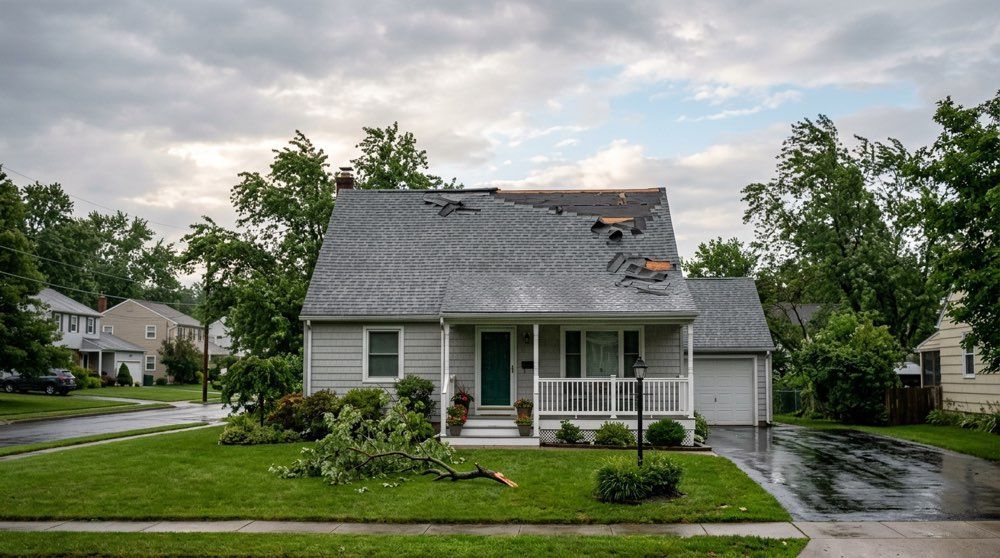
A roof can also need replacement after a single severe storm — a Berks County hailstorm or a microburst can total an otherwise healthy roof in twenty minutes. That’s a different path that runs through your insurance, and it has its own playbook.
What a Roof Replacement Actually Includes
Here’s something most homeowners don’t realize until they’re holding two very different quotes: a roof is a system, not just a layer of shingles. Two contractors can both say “we’ll replace your roof” and mean completely different things. Understanding the components is how you compare quotes honestly and avoid the cheap bid that skips half the job.
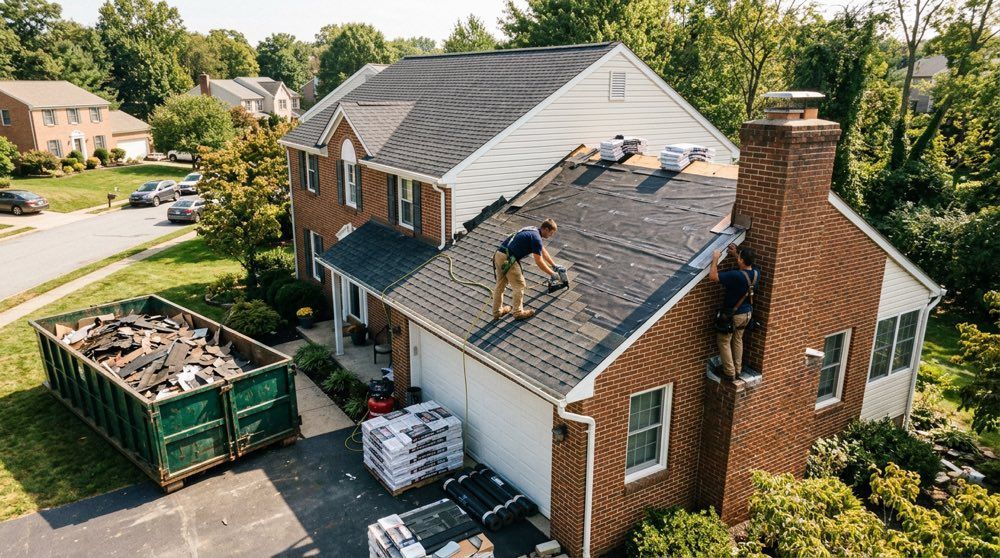
A complete residential roof replacement includes:
- Tear-off of the old roofing down to the wood deck. (Some contractors offer a “layover” — new shingles installed over the old ones. We almost never recommend it; you’re hiding problems and adding weight, and most manufacturer warranties are weaker on a layover.)
- Deck inspection and repair. Once the old roof is off, we can see the plywood or board decking underneath. Rotted or soft sections get replaced — this is where a leak’s real damage hides.
- Ice and water shield in the vulnerable areas: eaves, valleys, and around penetrations. In our Pennsylvania winters, this membrane is what stops ice-dam water from backing up under the shingles.
- Synthetic underlayment across the rest of the deck — the secondary water barrier beneath the shingles.
- Drip edge metal along the eaves and rakes to direct water into the gutters instead of behind them.
- Starter strip and the field shingles themselves.
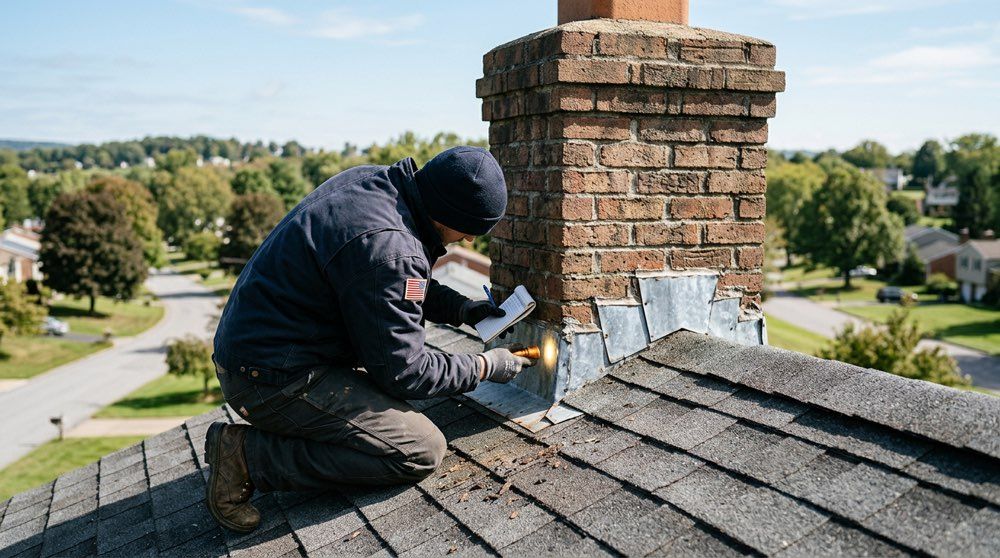
- Flashing at every transition — chimneys, walls, skylights, vents. Bad flashing causes more leaks than bad shingles ever will.
- Ridge ventilation and ridge cap to let hot, moist attic air escape, which is what protects the shingles’ lifespan from the inside.
- Cleanup and a magnetic nail sweep of your yard and driveway.
When a bid comes in noticeably cheaper than the others, the difference is almost always in this list — skipped deck repair, builder-grade underlayment instead of ice-and-water shield, reused old flashing. The shingles are the part you can see. The system is the part that keeps you dry.
Choosing Your Roofing Materials
For the large majority of Berks County homes, the right answer is a quality architectural asphalt shingle — sometimes called a dimensional or laminated shingle. They’ve largely replaced the old flat “3-tab” shingle because they last longer, handle wind better, and frankly look far better, with a layered, dimensional appearance that suits everything from a Reading row home to a Wyomissing colonial.
We install two shingle lines, and we don’t carry a dozen brands for a reason: we’d rather know two excellent products cold than know ten mediocre ones casually.
- Owens Corning Duration is our primary recommendation. Its SureNail strip — a woven reinforcing band across the nailing zone — gives it a genuinely strong wind rating and a forgiving install, which matters on the exposed, breezy ridgelines we see across the county’s open farmland edges.
- GAF Timberline HDZ is our secondary line, another industry-leading architectural shingle with a wide color range and a proven track record.
Both come in color palettes that work with brick, siding, and stone, and both carry strong manufacturer warranties. We’ll walk your home with you and show samples against your actual siding and trim before you commit — color is the one decision you’ll look at every day for the next two decades. We dig into the materials decision here.
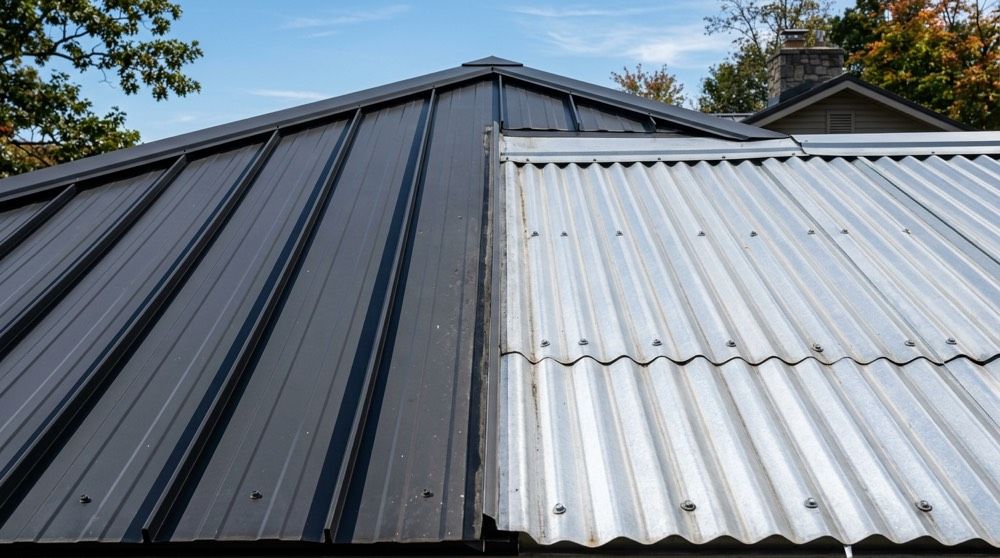
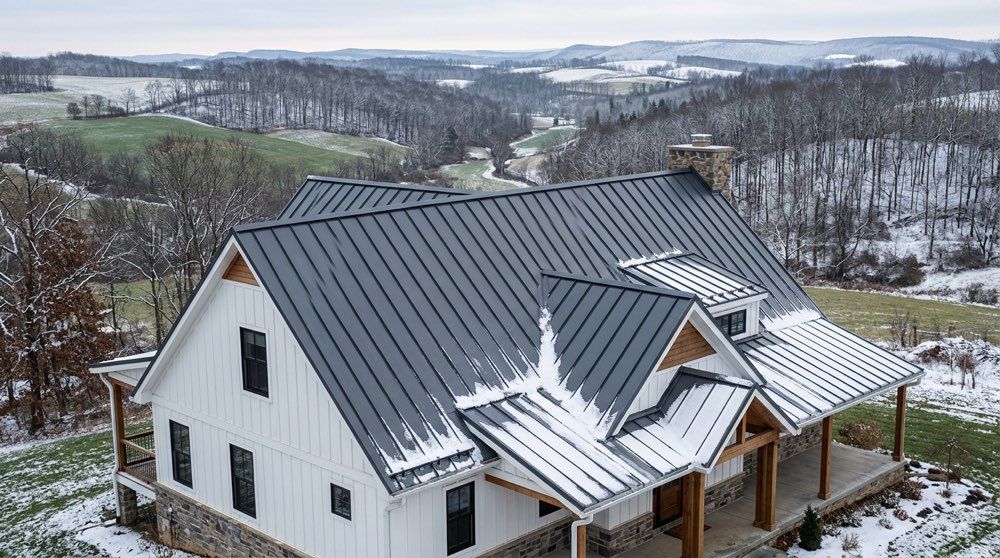
If you’re weighing asphalt against a metal roof, that’s a real conversation worth having on certain homes — but it’s a different guide for a different decision, and metal isn’t the right call for most of the houses we work on.
What Roof Replacement Costs in Berks County
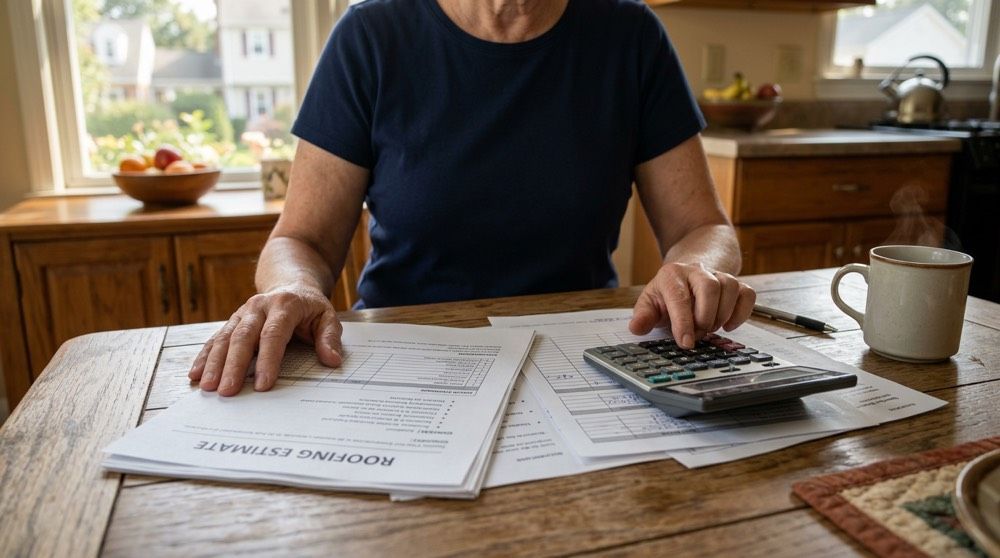
This is the question everyone wants answered first, and we understand why — but it’s also the one where honest contractors give ranges instead of a single number, because the real price depends on your specific roof. Anyone who quotes you a firm price over the phone without seeing the roof is guessing.
The biggest cost drivers are:
- Size and pitch. Roofs are measured in “squares” (100 square feet). A bigger, steeper roof costs more in both material and labor — steep roofs are slower and require more safety setup.
- Complexity. Valleys, dormers, multiple levels, skylights, and chimneys all add labor and flashing work. A simple gable roof is far cheaper per square than a cut-up roof with six different planes.
- Tear-off and deck condition. Removing one layer is standard; removing two layers costs more, and any rotted decking found during tear-off is an add.
- Material choice. A premium designer shingle costs more than a standard architectural shingle.
- For a typical residential roof replacement in Berks County, most homeowners land somewhere in the mid-four figures to low-five figures — and the honest truth is that the spread is wide because houses are different. The number that matters isn’t the lowest bid; it’s the complete bid from a contractor who itemized the system above and stood behind it.
A roof replacement is also one of the home improvements with the strongest resale return, and financing is available — we work with options that let homeowners spread the cost rather than drain savings.
A word on the cheapest quote: in roofing, it’s almost never the bargain it looks like. The money a low bid saves comes out of the parts of the system you can’t see, and it tends to reappear as a leak — usually right after the contractor who installed it has moved on.
What to Expect During the Project
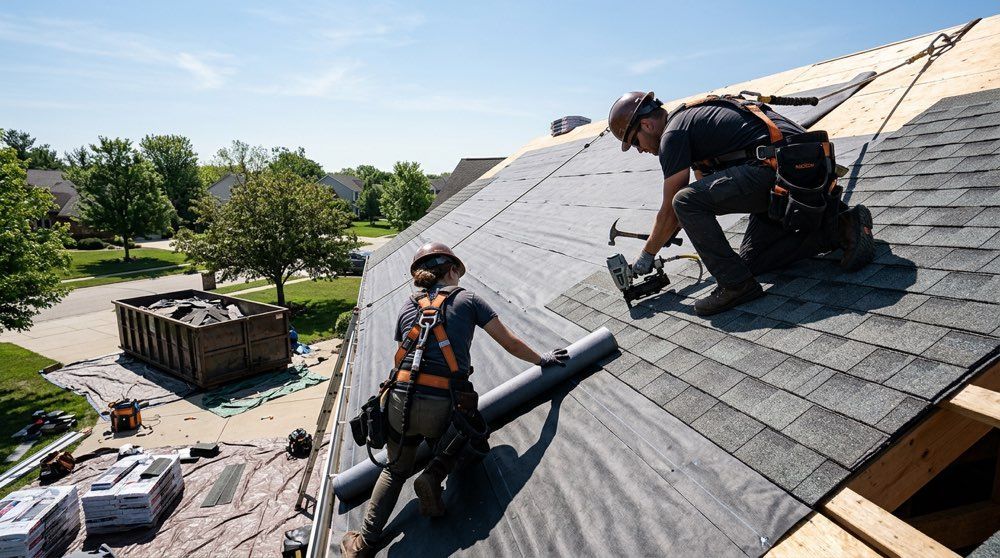
A roof replacement on an average Berks County home is usually a one- to two-day job once we start, weather permitting. Here’s how a typical project runs, so there are no surprises.
Before the crew arrives, we’ll confirm the date and ask you to do a few small things: move cars out of the driveway, take down fragile items from walls that share framing with the attic (vibration can rattle them), and clear a path to the area where the dumpster will sit.
Day one starts with protection. Before a single shingle comes off, we tarp and protect landscaping, AC units, and walkways below the work area. Then the tear-off begins, the deck gets inspected and repaired, and the new underlayment, ice-and-water shield, and flashing go down.
The shingles go on, ridge ventilation is installed, and the ridge cap finishes the job.
Cleanup is part of the work, not an afterthought. We run magnetic sweepers across your yard and driveway to pull up stray nails, and we haul everything away. When we leave, the only sign we were there should be a better roof.
Weather happens. If rain moves in mid-project, we never leave your home exposed — the deck gets dried-in with underlayment and tarped so you stay dry, and we resume when conditions are safe. Pennsylvania weather rarely cooperates perfectly, and a good crew plans around it.
Warranties — and Why Ours Is Different
This is the part of the industry that quietly costs homeowners the most, so read this section twice.
There are two completely different warranties on a new roof, and they cover different things:
- The manufacturer’s warranty covers the shingles themselves — defects in the product. Owens Corning and GAF both back their architectural shingles with long-term, often “lifetime,” limited warranties. This is real coverage, but it only matters if the product itself fails, which is rare.
- The labor (workmanship) warranty covers the installation — the contractor’s work. This is where almost all real-world roof failures actually happen. A nail driven wrong, flashing installed poorly, a valley done sloppily: none of that is a product defect, so the manufacturer’s warranty won’t touch it.
- Here’s the catch most homeowners never hear: the industry-standard labor warranty is one or two years. That means if your roof develops an installation leak in year three, you’re on your own — even though the shingles are still “under warranty.”
Red Patch backs every roof we replace with a 15-year labor warranty. That’s not a typo and it’s not a gimmick. We can offer it because we install it right the first time, and because we’re not going anywhere — we’re a local Berks County company, not a storm-chasing outfit that’ll be in another state next spring. A long labor warranty is the most honest signal a roofer can give you about how confident they are in their own work.
How to Choose a Roofing Contractor in Berks County
Choosing the right roofing contractor in Berks County matters as much as choosing the right shingle — arguably more, because the installation is where most roofs quietly succeed or fail. A great shingle installed poorly is a bad roof. Here’s how to separate the contractors worth your time from the ones to walk away from.
Are they actually local — and have they been here a while? A company with a real Berks County address and a multi-year track record has a reputation to protect and will still be reachable in five years when you have a question. Be especially careful after a big storm, when out-of-town “storm chaser” crews flood the area, sign as many roofs as they can, and leave. A warranty is only as good as the company still being around to honor it.
Are they properly registered and insured? In Pennsylvania, contractors who perform home improvements are required to hold a state Home Improvement Contractor (HIC) registration. Ask for the number, and ask for proof of both liability insurance and workers’ compensation. If a crew member is hurt on your property and the contractor isn’t carrying coverage, that can become your problem.
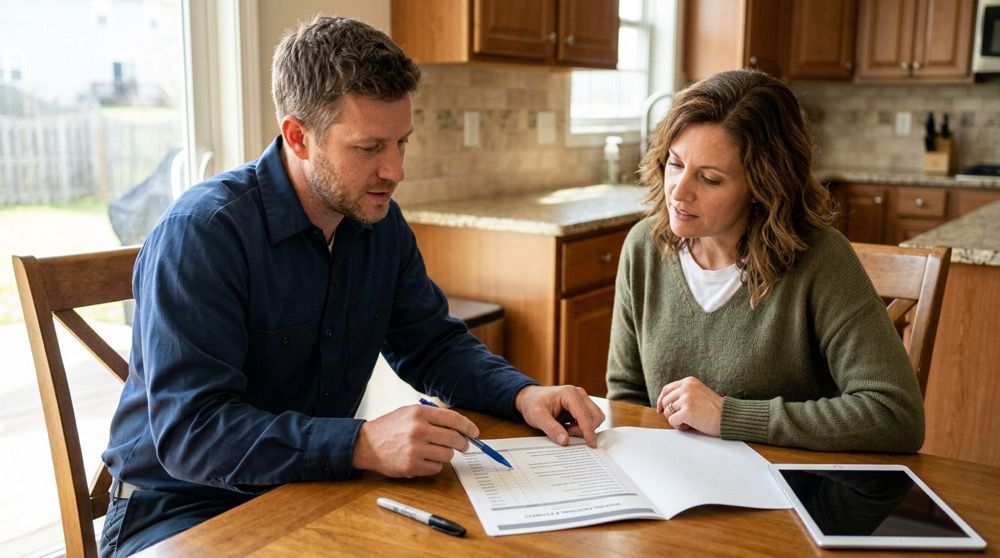
Will they put the full system in writing? A trustworthy quote is itemized — tear-off, deck repair allowance, ice-and-water shield, underlayment, flashing, ventilation, the specific shingle line and color, and cleanup. A one-line “replace roof — $X” tells you nothing and hides everything. If a contractor won’t itemize, you can’t compare them honestly against anyone else.
What’s their labor warranty — really? As covered above, the industry standard is a thin one to two years. A contractor confident in their own work backs it for longer. Get the labor warranty term in writing, not just spoken on the porch.
Do they have real, local reviews? Look for recent Google reviews from named Berks County homeowners, not a wall of generic five-stars. Better still, ask to drive past a roof they finished nearby.
Are they pressuring you to sign today? “This price is only good if you commit right now” is a sales tactic, not a roofing practice. A real roof and a fair quote are still there tomorrow.
None of this is just our opinion — industry authorities like the National Roofing Contractors Association advise homeowners to gather several detailed written proposals and weigh them on quality, not price alone. Whether you’re planning a roof replacement in Reading, a project out in Wyomissing, or a re-roof on a farmhouse in one of the outlying townships, these standards don’t change. The right contractor will welcome every one of these questions — because the answers are exactly why you should hire them.
Why Berks County Homeowners Choose Red Patch
We’ll be straight with you: there are plenty of roofers who can nail shingles to a deck. What we built Red Patch to be is the company that does it the way it’s supposed to be done, for the neighbors we live among.
Our founder, Sam Kensinger, served three tours with the 82nd Airborne before coming home to Berks County and starting this company. The standards that come out of that — show up when you say you will, do the job to spec, document it, and stand behind it — aren’t marketing lines for us. They’re just how the work gets done.
We stay in Berks County on purpose. We’re not a regional franchise running crews across three states; we’re here, our reputation is local, and when you call, you’re talking to people who know the difference between a Reading row home’s roof and a center-hall colonial out in Wyomissing. After a storm rolls through and the out-of-town trucks show up handing out flyers, we’re still the company that was here before the storm and will be here after it.
And we keep our promises in writing — fair, itemized quotes with no surprise add-ons, the full roofing system installed every time, and that 15-year labor warranty behind all of it.
Frequently Asked Questions
How long does a roof replacement take?
Most residential roofs in Berks County are completed in one to two days, depending on the size, pitch, and complexity of the roof and the weather. Larger or more complex roofs can run longer. We’ll give you a realistic timeline when we quote the job, not an optimistic one.
Can I stay home during the roof replacement?
Yes. You can stay in your home during the project — there’s no need to relocate. It is loud, especially during tear-off, so many homeowners with young kids, pets, or anyone working from home choose to plan around the noisiest hours. We’ll let you know the schedule in advance.
Should I repair or replace my roof?
It depends on the roof’s age and the extent of the problem. A localized issue on a roof with good years left is usually a repair; widespread wear, or problems on a roof past 20 years old, usually points to replacement. We’ll give you an honest assessment — if a repair is the smart move, we’ll tell you that.
Do you handle insurance claims for storm damage?
Yes. If your roof was damaged by a storm, we can inspect it, document the damage properly, and work alongside your insurance adjuster through the claim. Storm damage and the insurance process is involved enough that we cover it separately and in depth.
Ready to Talk About Your Roof?
If your roof is showing its age, leaking, or took a hit in a storm, the next step is simple: get an honest, no-pressure assessment from a local company that will tell you the truth — including when you don’t need a new roof yet.
Schedule your free roof inspection and estimate. We’ll walk your roof, show you what we find, and give you a clear, itemized quote with our 15-year labor warranty in writing.
Sam Kensinger is the founder of Red Patch Roofing & Contracting, a veteran-owned roofing company serving Berks County, Pennsylvania. A combat veteran of the 82nd Airborne Division with three tours in Afghanistan, Sam built Red Patch on the standards he carried home from service: do the work right, document everything, and stand behind it. Red Patch installs Owens Corning Duration and GAF Timberline HDZ shingles and backs every roof with a 15-year labor warranty.
Recent Posts